
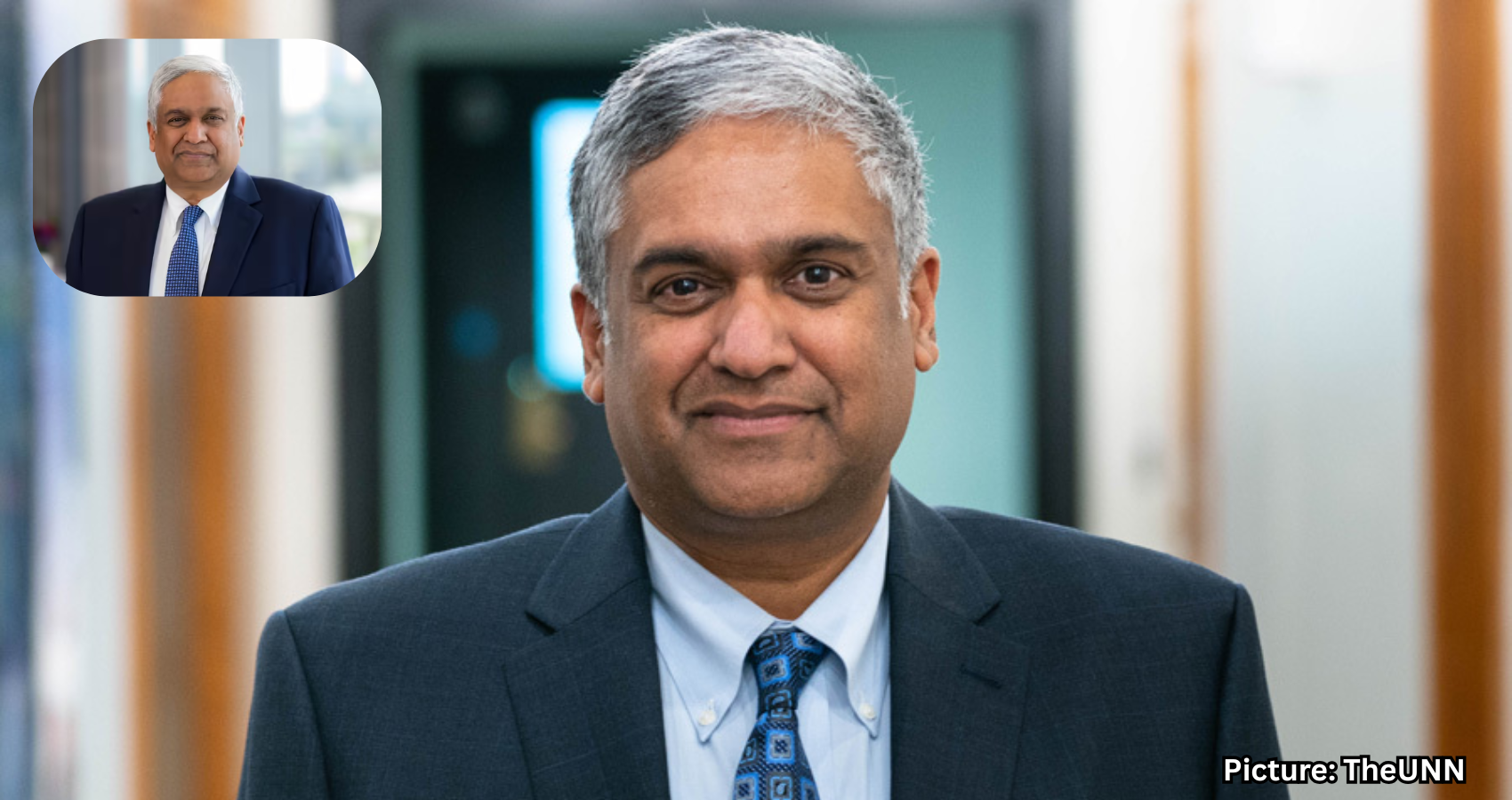
Anantha P. Chandrakasan, MIT’s Provost, has been awarded the 2025 IEEE Test of Time Award for his influential research on low-power chip design, which has significantly impacted modern technology.
Decades before smartphones became ubiquitous, a young researcher from Chennai, India, was already addressing a critical challenge that would enable the mobile revolution: extending battery life. Anantha P. Chandrakasan, currently the Provost of the Massachusetts Institute of Technology (MIT), is one of three recipients of the 2025 IEEE Journal of Solid-State Circuits (JSSC) Test of Time Award.
This prestigious honor recognizes his seminal 1992 paper, “Low-Power CMOS Digital Design,” which has become one of the most cited works in the semiconductor industry. The Test of Time Award, established by the IEEE Solid-State Circuits Society, acknowledges technical excellence that has demonstrated a lasting impact over at least a decade.
In Chandrakasan’s case, the influence of his research has extended well beyond thirty years. His work laid the groundwork for reducing power consumption in integrated circuits, facilitating the creation of energy-efficient devices, from high-performance laptops to the smartphones that are now integral to daily life.
Chandrakasan’s journey to the forefront of American academia began in Chennai, where he was born into a family that prioritized education. His mother, a respected biochemist and Fulbright Scholar, instilled in him a passion for learning. He moved to the United States during his high school years, which set the stage for his future achievements.
He pursued higher education at the University of California, Berkeley, where he earned his bachelor’s, master’s, and doctoral degrees in electrical engineering and computer sciences. His early fascination with applying science to solve real-world problems led him to join the MIT faculty in 1994. Over the years, he ascended through various roles, ultimately becoming the Dean of Engineering and, later, the Institute’s 14th Provost.
During the early 1990s, the semiconductor industry was primarily focused on speed. However, Chandrakasan shifted the narrative towards “energy-per-operation.” He demonstrated that chips could operate on significantly lower voltages without compromising performance, paving the way for the “always-on” world of the Internet of Things (IoT) and wearable medical technology.
Colleagues describe Chandrakasan not only as a brilliant engineer but also as a “people-centered” leader. At MIT, he has championed diversity in STEM fields, launching initiatives such as the “Rising Stars” program to support women in engineering. He has also spearheaded significant projects in artificial intelligence and climate sustainability.
As he oversees MIT’s academic and research enterprise, the Test of Time Award serves as a testament to a career marked by foresight and innovation. While the technology of 1992 may now be considered outdated, the principles and logic that Chandrakasan developed continue to shape the future of electronics and computing.
According to IEEE, his contributions have not only transformed the industry but have also inspired a new generation of engineers and researchers.