
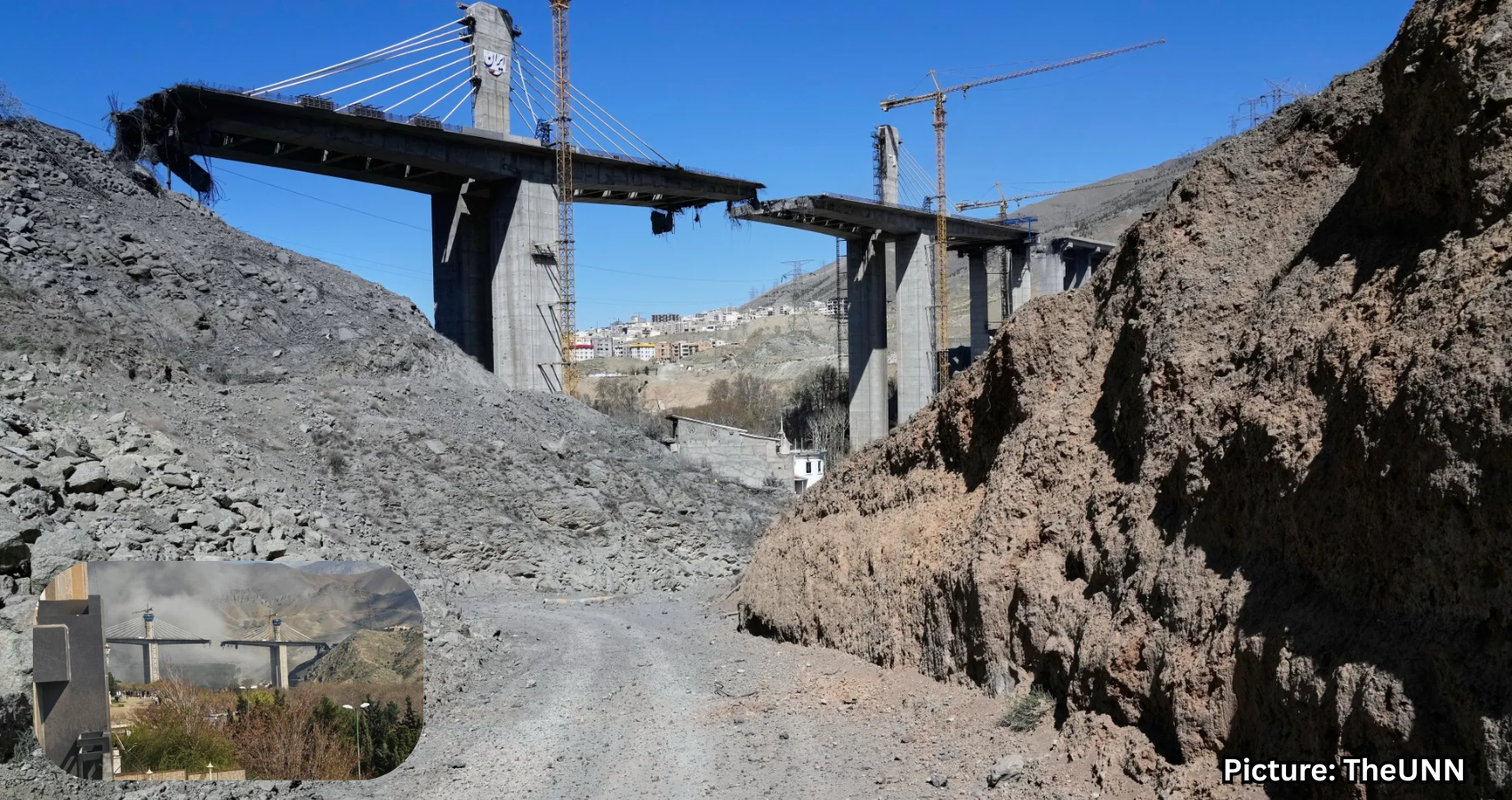
Iran’s tallest bridge has collapsed following reported U.S. airstrikes, prompting threats of retaliation against American allies from Iranian officials.
Iran’s tallest bridge, located near Tehran, has collapsed in a dramatic incident captured on video, coinciding with reports of U.S. airstrikes. President Donald Trump announced the event on Thursday, urging the Iranian regime to negotiate a deal before tensions escalate further.
The B1 highway bridge, which serves as a crucial connection between Iran’s capital and the western city of Karaj, was inaugurated earlier this year and is considered the tallest bridge in the Middle East. The collapse has raised concerns about the implications for regional stability and infrastructure.
In a post on social media, Trump shared footage showing a massive plume of smoke and debris rising from the site of the bridge’s collapse. He remarked, “The biggest bridge in Iran comes tumbling down, never to be used again — Much more to follow! IT IS TIME FOR IRAN TO MAKE A DEAL BEFORE IT IS TOO LATE, AND THERE IS NOTHING LEFT OF WHAT STILL COULD BECOME A GREAT COUNTRY!”
According to reports from Middle Eastern outlet i24NEWS, the strike on the bridge was intended to disrupt drone and missile supply lines to Iranian forces targeting U.S. and Israeli military personnel. Iranian state television indicated that the bridge was struck twice, approximately an hour apart, resulting in civilian casualties.
A broadcast from Iranian state media claimed, “A few minutes ago, the American-Zionist enemy once again targeted the B1 bridge in Karaj,” and noted that the first strike resulted in the deaths of two civilians. Additionally, Fars News reported that other locations in Karaj were also targeted during the airstrikes.
In light of the destruction, Iranian officials have expressed intentions to rebuild the bridge with the assistance of local engineers and experts. However, the Iranian Islamic Revolutionary Guard Corps has reportedly identified several bridges in American-allied nations across the Middle East as potential targets for retaliation. These include infrastructure in Kuwait, Saudi Arabia, Bahrain, Abu Dhabi, and the Jordan-West Bank region.
The situation remains tense as both sides navigate the complex geopolitical landscape, with Iran’s threats of retaliation underscoring the potential for further escalation in the region. The international community is closely monitoring developments, as the fallout from these events could have significant implications for U.S.-Iran relations and broader Middle Eastern stability.
As tensions rise, the focus will likely shift to diplomatic efforts aimed at de-escalation, although the path forward remains fraught with challenges and uncertainties, according to Iran International.