
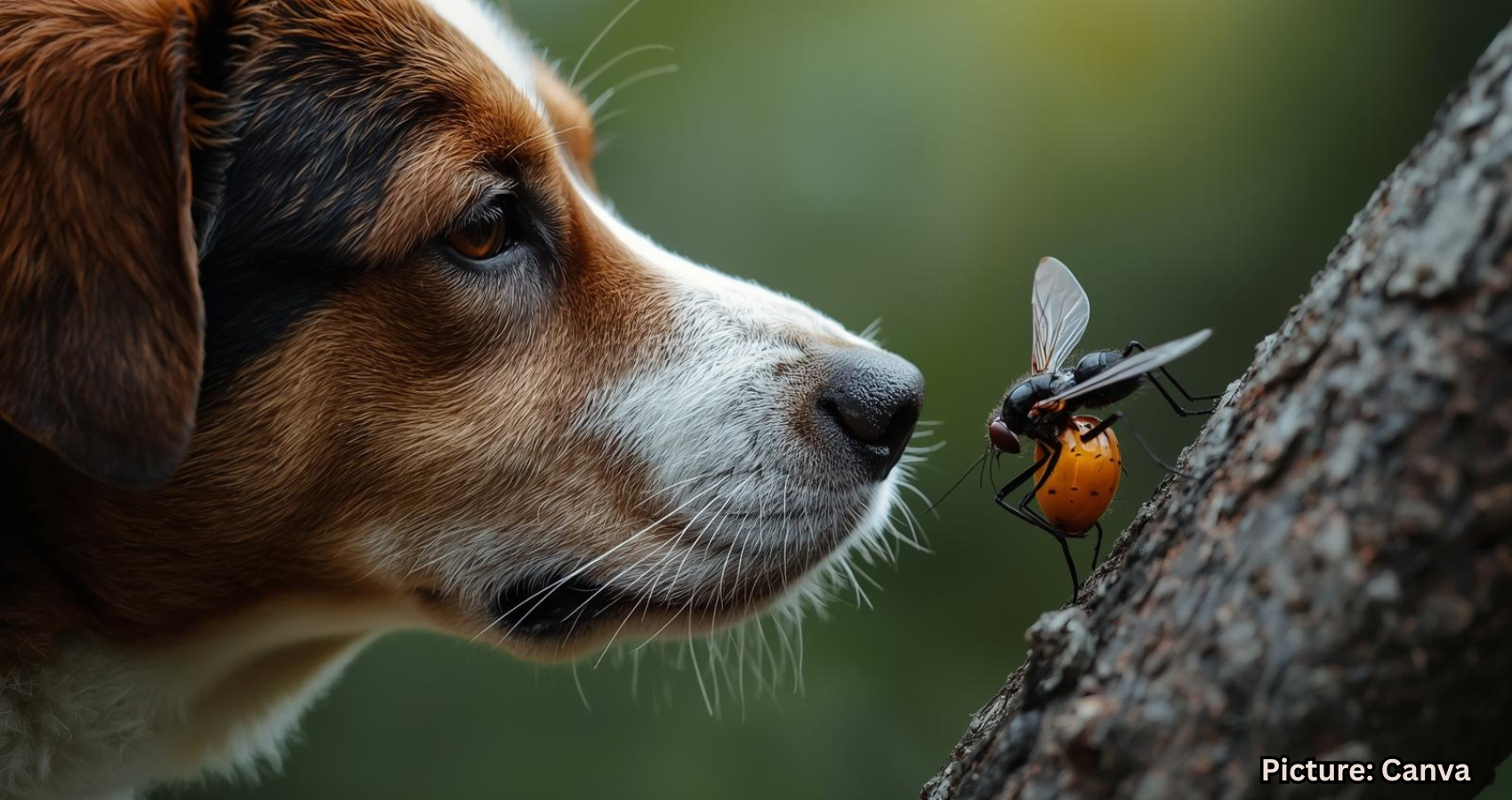
Researchers at Virginia Tech have demonstrated that dogs can effectively detect the invasive spotted lanternfly, offering a potential new method for controlling its spread.
Catching the spotted lanternfly early is crucial, but locating its eggs can be a challenging task. This is where dogs come into play, utilizing their exceptional sense of smell to assist in the effort.
Researchers at Virginia Tech have found that dogs, often referred to as man’s best friend, may also serve as a valuable ally in combating this invasive pest. For the first time, a study indicates that pet dogs can help curb the rapid spread of the spotted lanternfly.
The spotted lanternfly feeds on various plants and excretes a sugary substance known as honeydew, which fosters mold growth. Due to their destructive nature, some states have initiated campaigns encouraging residents to stomp on these pests whenever they are spotted. Experts emphasize that the most effective strategy is to eliminate their egg masses, which can be difficult to locate as they often resemble dried mud and blend into their surroundings.
“Dogs have one dominant sense. It’s their nose. We use our eyes. Dogs use their nose like their eyes,” explained Katie Thomas, a participant in the study.
Thomas, along with her nine-year-old pit bull mix, Finch, took part in the study with the aim of applying their years of recreational scent work to a pressing environmental issue. They underwent both indoor and outdoor tests, successfully sniffing out egg masses, with Finch receiving praise for his accuracy.
“To be able to do things that we already do, that we are having a lot of fun with… train our dogs to sniff stuff, being able to apply that to something like a real problem that affects our community is really fulfilling,” Thomas remarked.
The spotted lanternfly is native to Asia and was first identified in the United States in Pennsylvania over a decade ago. Since then, it has spread to 19 states, according to the United States Department of Agriculture (USDA).
“They are everywhere, and we need to search out the eggs. The problem is it’s too late once we have the lanternfly,” stated Carolyn Shelburne, another study participant.
Shelburne and her nine-year-old border collie, Hermes, were among the first five K9 and handler teams to pass their field tests. In total, 182 volunteer teams from across the U.S. participated in the study.
During indoor tests, dogs successfully identified the lanternfly scent more than 80% of the time. In real-world outdoor tests, they achieved a correct identification rate of over 60%, which is still superior to most human searches.
“Hopefully, more people will see that you can train any dog to do this, and it gives you something fun to do with your dog,” Shelburne added.
Researchers are optimistic that this study marks the beginning of a broader role for dogs in protecting local environments. Even in regions where spotted lanternflies are not yet a concern, dogs could potentially be trained to detect other invasive species.
According to Virginia Tech, the findings from this study could pave the way for innovative approaches to managing invasive pests and safeguarding ecosystems.