
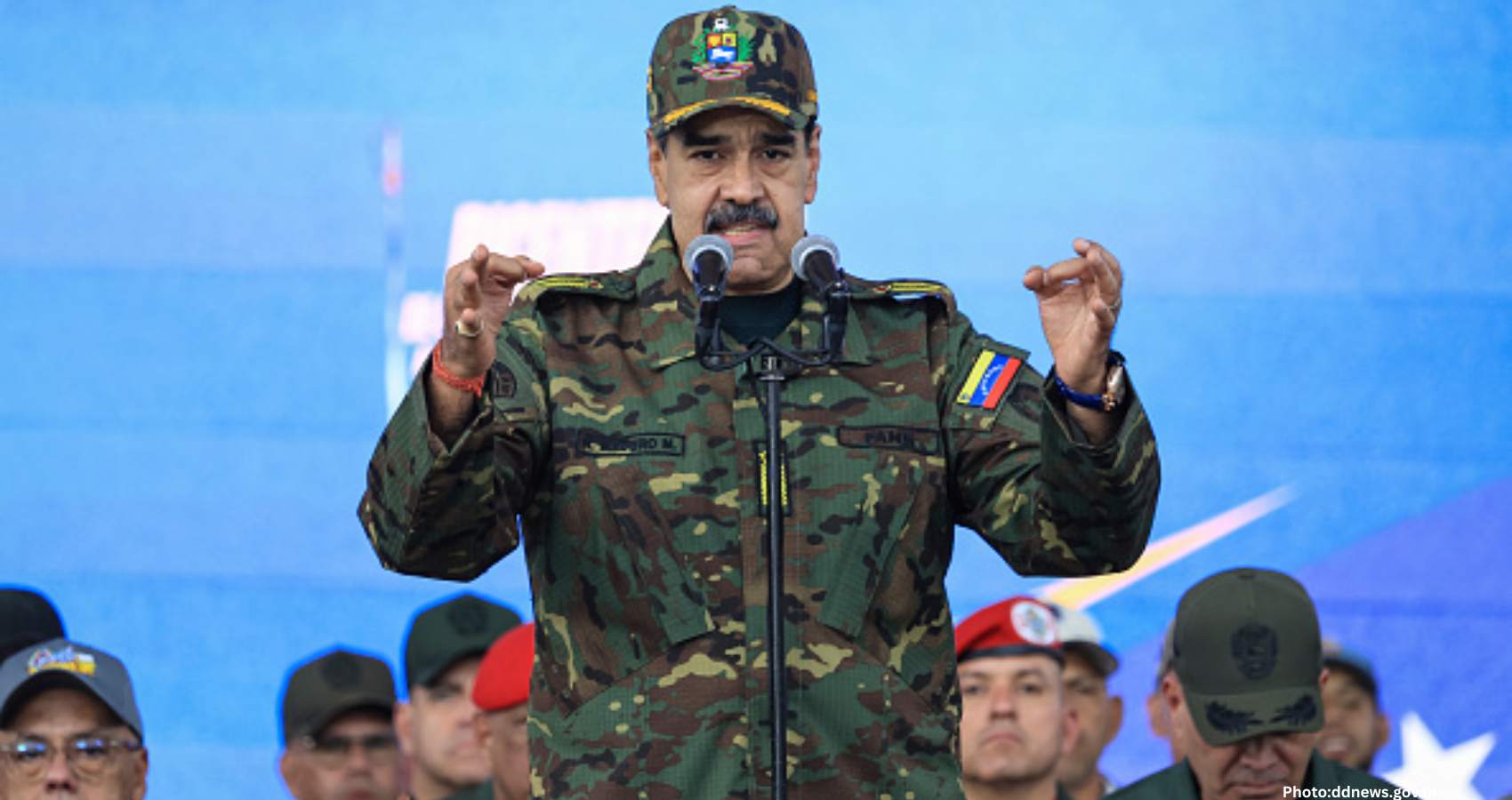
Venezuelan President Nicolás Maduro’s spiritual connection to Indian guru Sathya Sai Baba has resurfaced amid ongoing political and economic challenges in Venezuela.
Before Venezuela’s political crisis captured global attention, President Nicolás Maduro cultivated a significant spiritual bond with Indian guru Sathya Sai Baba during a visit to his ashram in India.
Recent media reports have reignited interest in Maduro’s long-standing association with the late spiritual leader, whose influence extended from South Asia to Latin America. Although this connection has not translated into formal policy or diplomatic relations, it provides a unique insight into the personal beliefs that shape one of the Western Hemisphere’s most controversial figures.
Maduro, who was raised in the Catholic faith, was introduced to Sai Baba’s teachings in the early 2000s through his wife, Cilia Flores. According to various Indian and Latin American media sources, the couple later traveled to Puttaparthi, Andhra Pradesh, the site of Sai Baba’s Prasanthi Nilayam ashram, where they reportedly attended a private audience with the guru.
As Maduro ascended the political ladder in Venezuela—from labor leader to foreign minister and eventually president—his admiration for Sai Baba remained evident. Reports indicate that images of Sai Baba were displayed alongside portraits of Venezuelan independence heroes and former President Hugo Chávez in Maduro’s personal spaces, highlighting the symbolic significance the guru held for him.
The depth of this connection became particularly apparent in 2011, following Sai Baba’s death. At that time, Maduro, serving as Venezuela’s foreign minister, led official expressions of condolence, praising the guru’s message of service and moral discipline. Venezuelan institutions marked the occasion with formal tributes, a notable gesture in a predominantly Catholic nation.
Sai Baba’s influence extended beyond Maduro’s personal devotion. Under his leadership, organizations affiliated with Sai Baba continued to operate openly in Venezuela, running community programs focused on education and humanitarian aid. Today, Venezuela is home to one of the largest communities of Sai Baba devotees in Latin America, reflecting the guru’s broader appeal beyond India.
This narrative sheds light on an often-overlooked aspect of global politics: the impact of personal belief systems on leaders’ identities. While there is no evidence that Sai Baba’s teachings have influenced Venezuelan state policy, the relationship illustrates how spiritual affiliations can transcend cultural and geographic boundaries.
The renewed focus on Maduro’s spiritual ties comes at a time when Venezuela remains mired in political turmoil and economic hardship, with his leadership facing ongoing international scrutiny. In this context, his connection to India serves as a striking contrast, reminding us that political figures often carry personal influences that extend beyond ideology, power, and geography.
For Indian American communities, this information resonates as yet another example of India’s soft cultural influence reaching unexpected corners of the world, conveyed not through formal diplomacy but through faith, symbolism, and personal conviction.
According to The American Bazaar, the interplay between personal beliefs and political leadership continues to be an important area of exploration in understanding global dynamics.