
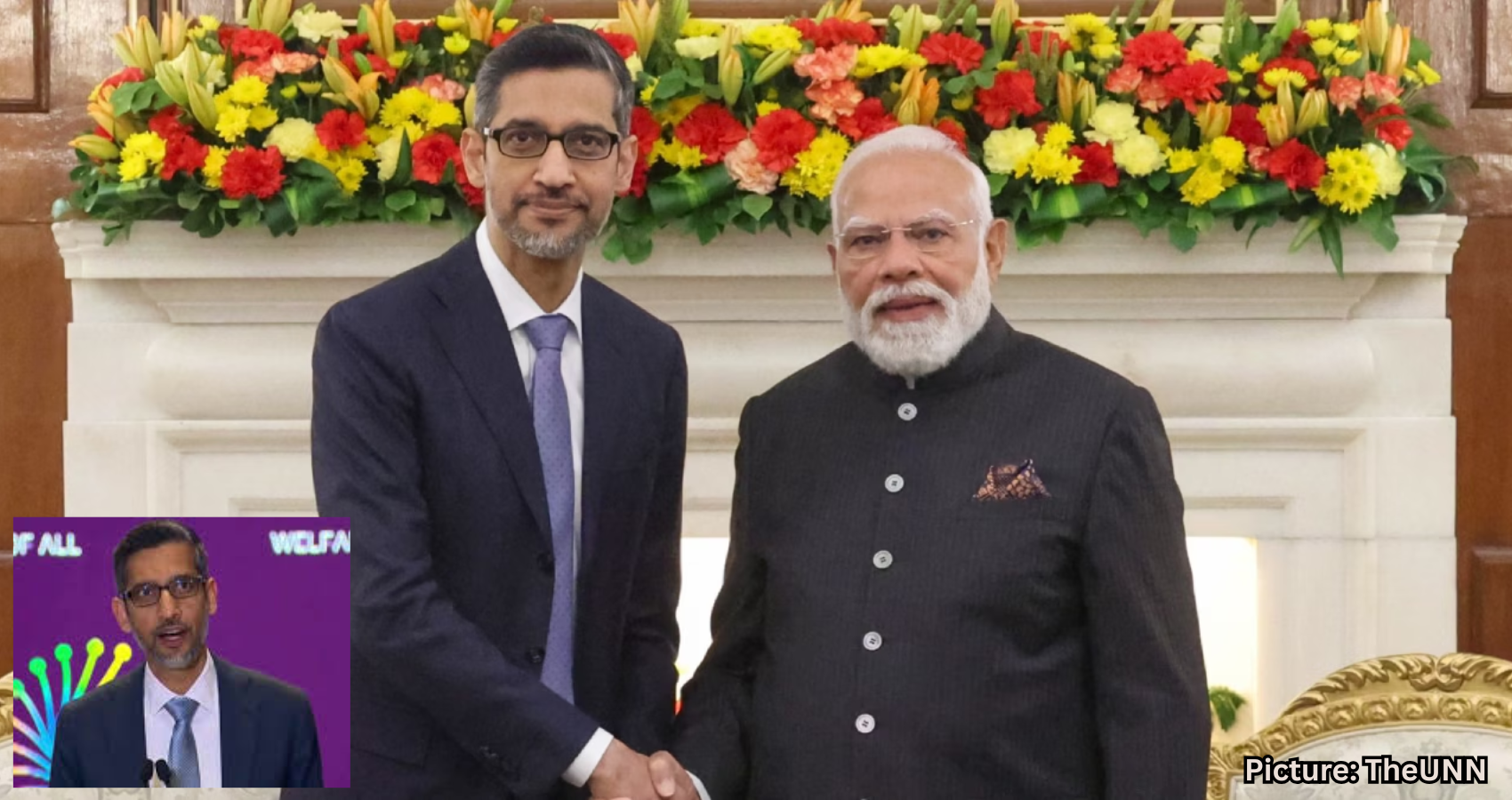
Sundar Pichai announced a $15 billion investment in artificial intelligence during the AI India Impact Summit, highlighting Visakhapatnam’s emergence as a global AI hub.
During the AI India Impact Summit held in New Delhi, Sundar Pichai, the CEO of Google and Alphabet, announced a significant $15 billion investment aimed at advancing artificial intelligence (AI) in India. Pichai emphasized the transformative potential of AI and its role in shaping the future of technology, particularly in emerging economies.
Speaking on the fourth day of the summit, Pichai remarked on the remarkable evolution of Visakhapatnam, a coastal city that Google has chosen as a focal point for its AI initiatives. He noted that the city is poised to become a major center for AI development as part of Google’s long-term strategy in India.
“Through Visakhapatnam, I remember it being a quiet and modest coastal city brimming with potential. Now, in that same city, Google is establishing a full-stack AI hub, part of our $15 billion infrastructure investment in India,” Pichai stated. He expressed his surprise at the city’s transformation into a global AI hub, highlighting the hub’s future capabilities, including gigawatt-scale computing and a new international subsea cable gateway.
Pichai underscored the significance of AI as a transformative force, stating that it represents “the biggest platform shift of our lifetimes.” He believes that AI has the potential to accelerate progress across various sectors and help emerging economies overcome traditional barriers to growth.
“The product shows what’s possible when humanity dreams big, and no technology has me dreaming bigger than AI,” he said. Pichai pointed out that while the potential for AI is immense, achieving its benefits is not guaranteed and requires concerted effort.
He highlighted the role of AI in advancing scientific discovery, citing the groundbreaking work of Google DeepMind in protein structure prediction. “For 50 years, predicting protein structures was a grand challenge that stalled drug discovery. Demis Hassabis and his team at Google DeepMind asked an audacious question: how could we use AI to solve this? That question led to AlphaFold,” Pichai explained.
This breakthrough, which recently won a Nobel Prize, has condensed decades of research into an open-access database that is now utilized by over 3 million researchers in more than 190 countries. These researchers are leveraging the database to develop malaria vaccines, combat antibiotic resistance, and tackle other critical health challenges.
Pichai further elaborated on the diverse applications of AI within the scientific community, from cataloging DNA disease markers to creating AI agents that serve as partners in research. “We must be equally bold in tackling problems in regions that have lacked access to technology,” he stressed.
In conclusion, Pichai reiterated the importance of responsible and inclusive AI development, emphasizing the need to ensure that the benefits of this technology reach all segments of society. His remarks at the summit reflect a commitment to fostering innovation and addressing global challenges through AI.
This article was republished with permission from Free Press Journal.