
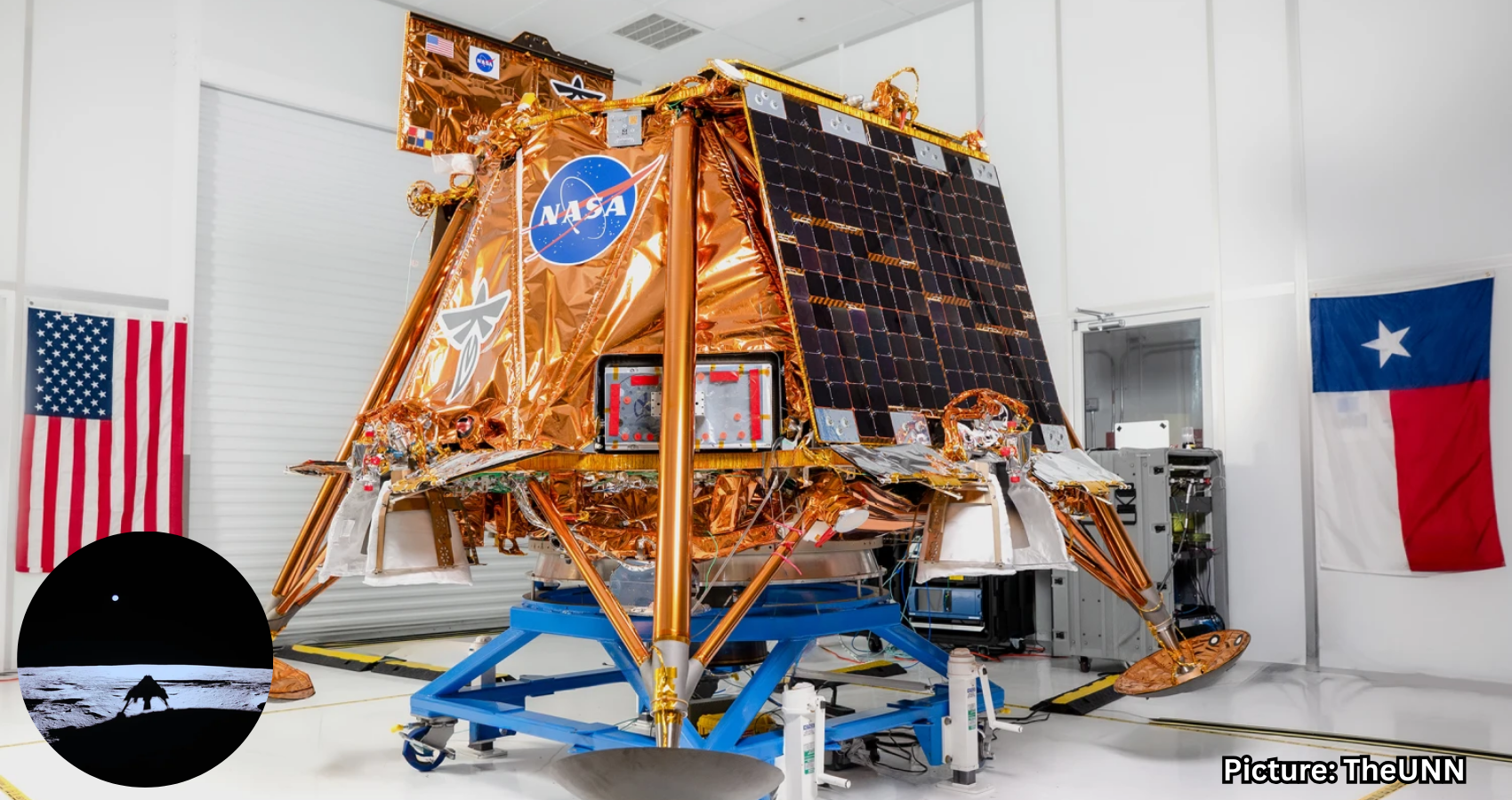
A private lunar lander, Blue Ghost, successfully landed on the moon on Sunday, delivering equipment for NASA and marking a significant milestone for commercial space exploration.
A private lunar lander carrying equipment for NASA successfully touched down on the moon on Sunday, with Mission Control confirming the landing from Texas. This achievement highlights the growing involvement of private companies in lunar exploration as they prepare for future astronaut missions.
Firefly Aerospace’s Blue Ghost lander made its descent from lunar orbit on autopilot, targeting the slopes of an ancient volcanic dome located in an impact basin on the moon’s northeastern edge. The company’s Mission Control, situated outside Austin, Texas, celebrated the successful landing.
“You all stuck the landing. We’re on the moon,” said Will Coogan, chief engineer for the lander at Firefly Aerospace.
This upright and stable landing makes Firefly the first private company to successfully place a spacecraft on the moon without crashing or tipping over. Historically, only five countries—Russia, the United States, China, India, and Japan—have accomplished this feat, with some government missions having failed in the past.
The Blue Ghost lander, named after a rare species of firefly found in the U.S., stands 6 feet 6 inches tall and spans 11 feet wide, providing enhanced stability during its lunar operations.
Approximately half an hour after landing, Blue Ghost began transmitting images from the lunar surface. The first photo sent back was a selfie, albeit somewhat obscured by the sun’s glare.
In addition to Blue Ghost, two other companies are preparing to launch their lunar landers, with the next mission expected to join Blue Ghost on the moon later this week.
This successful landing marks a significant step forward in the commercial space sector, as private companies continue to explore opportunities on Earth’s natural satellite.
According to The Associated Press, the advancements in lunar exploration by private entities could pave the way for more ambitious missions in the future.