
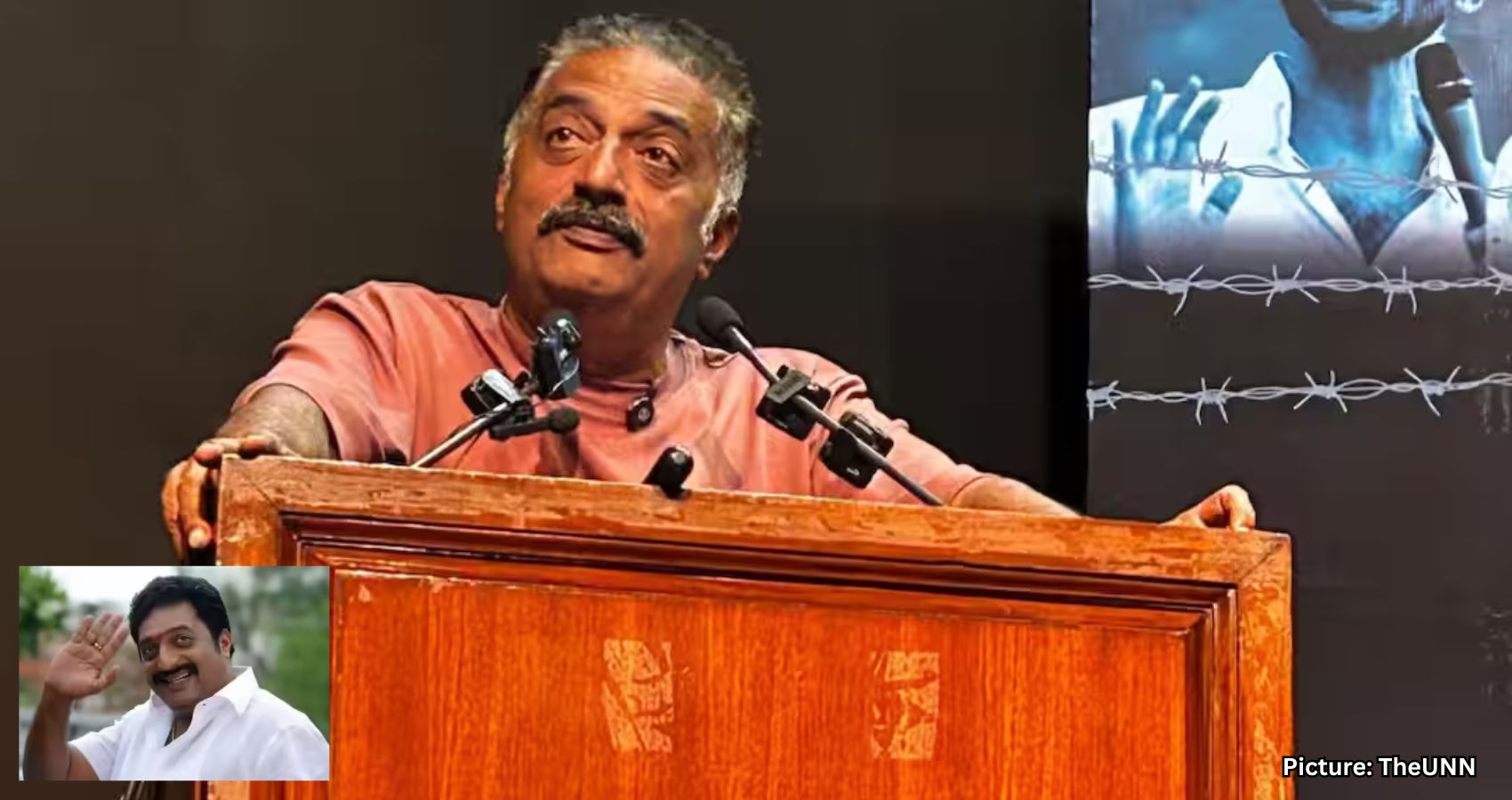
Veteran actor Prakash Raj critiques mainstream Hindi cinema, claiming it has lost its authenticity and emotional connection, becoming increasingly driven by commercial interests.
Veteran actor Prakash Raj has delivered a pointed critique of mainstream Hindi cinema, asserting that the industry has lost its authenticity and emotional connection with audiences. He described the current landscape as increasingly “fake, plastic, and money-oriented.” His remarks have ignited widespread discussion within the Indian film community, reigniting debates about artistic integrity, storytelling depth, and the commercial priorities that dominate Bollywood today.
Speaking at the Kerala Literature Festival, Prakash Raj contrasted Hindi cinema with the Malayalam and Tamil film industries, praising South Indian filmmakers for their commitment to strong, content-driven narratives that are deeply rooted in social reality and cultural depth.
“Hindi cinema has lost its soul,” he stated, emphasizing that contemporary Hindi films often prioritize glamour, profit, and image-building over meaningful storytelling and emotional resonance.
“Hindi cinema has lost its roots. Everything looks beautiful and polished — like plastic. It feels artificial, like a wax museum where there is appearance but no substance,” he remarked, drawing a striking comparison to Madame Tussauds, which is known for its lifelike yet inanimate figures.
Raj argued that modern Bollywood films increasingly focus on surface-level appeal, distancing themselves from the social, cultural, and emotional narratives that once defined classic Hindi cinema.
He traced this transformation to the rise of multiplex culture, suggesting that Hindi cinema has shifted its storytelling to cater primarily to urban, elite audiences, thereby losing touch with the realities of rural and middle-class viewers.
“After multiplexes became dominant, films were made only for select audiences. That’s when Hindi cinema drifted into Page-3 culture — obsessed with fame, publicity, and appearances,” he explained.
Raj added that this commercial mindset has led to a disconnect with grassroots audiences, particularly in regions such as rural Rajasthan, Bihar, and smaller towns, where cinema once served as a medium for social storytelling and national identity.
In contrast, he praised Malayalam and Tamil filmmakers, highlighting their commitment to realism, social awareness, and bold narratives. “Malayalam and Tamil cinema are telling powerful stories today. Young filmmakers are addressing meaningful subjects — caste, inequality, social justice, and lived realities. That gives me hope,” he stated.
He noted that South Indian cinema continues to experiment creatively, giving voice to marginalized communities and underrepresented perspectives while maintaining artistic depth and audience connection.
Raj lamented that classic Hindi films once played a significant role in building emotional unity, national identity, and cultural consciousness — elements he believes are now missing from contemporary offerings.
“Earlier films helped people connect emotionally and socially. They had a sense of responsibility. Today, it feels like many films are made only to make money,” he observed.
His comments reflect a broader sentiment shared by several filmmakers and actors who feel that Bollywood has become formula-driven, risk-averse, and overly profit-focused, often sidelining originality and storytelling courage.
Prakash Raj’s remarks have sparked strong reactions across social media and within film circles. Supporters argue that his critique highlights a genuine creative crisis in Hindi cinema, while others contend that commercial success and mass entertainment remain vital to the industry’s survival.
Film analysts suggest that his statements resonate with a growing conversation in the industry about reviving meaningful storytelling, reducing over-commercialization, and restoring authenticity in mainstream cinema.
A film commentator noted, “Prakash Raj is voicing what many artists feel — that storytelling should be rooted in truth, not just box-office numbers.”
Known for his impactful performances across Hindi, Tamil, Telugu, Kannada, and Malayalam cinema, Prakash Raj has long been recognized for his outspoken views on politics, cinema, and social issues. His cross-industry experience lends added weight to his perspective, as he has witnessed firsthand the creative evolution and commercial pressures shaping Indian cinema over the decades.
Ultimately, Prakash Raj’s critique serves as a call for introspection within Hindi cinema, urging filmmakers to reconnect with grassroots audiences, invest in authentic storytelling, and prioritize meaningful narratives over superficial appeal.
His remarks reinforce an ongoing industry question: Can Bollywood balance commercial success with artistic depth, or has profit overshadowed purpose? This ongoing debate continues to shape the future of Indian cinema, as artists and audiences alike seek a return to storytelling that resonates on a deeper level.
According to GlobalNetNews, the conversation sparked by Raj’s comments reflects a growing desire for change in the industry.