
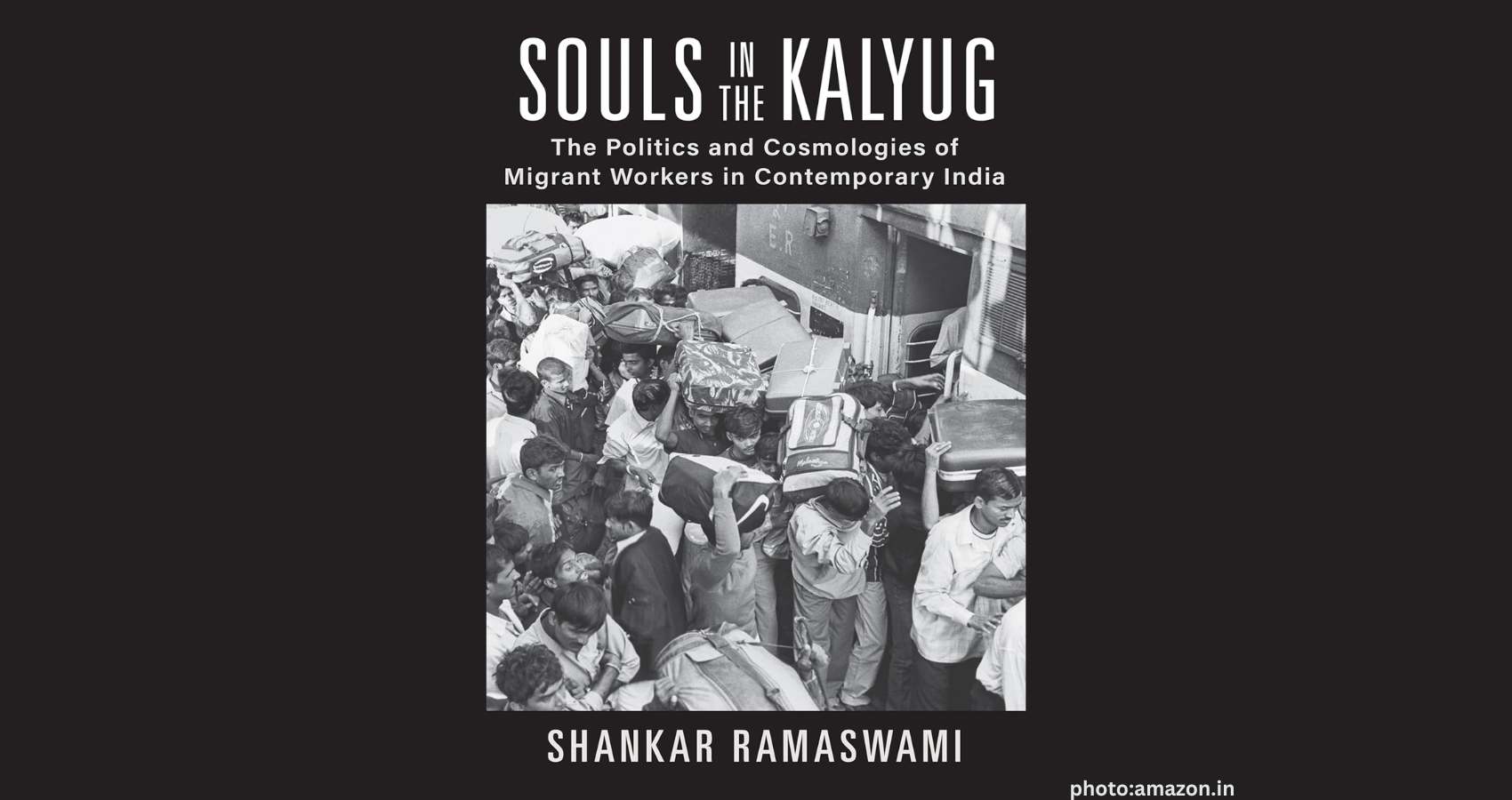
Migrant workers in India face ongoing struggles for justice, as documented in Shankar Ramaswami’s book, *Souls in the Kalyug*, which explores their lives within the harsh realities of global capitalism.
Over two decades ago, I first encountered Shankar Ramaswami while we were both conducting our Ph.D. fieldwork in South Delhi. My research in the Muslim locality of Zakir Nagar concluded within a year, while Shankar’s ethnographic study in the Okhla Industrial Estate spanned several years, from 2002 to 2006. This extensive research is evident in his recently published book, *Souls in the Kalyug*, which meticulously chronicles the multi-layered struggles of men employed in a metal-polishing factory supplying home décor and artware primarily for the American market.
This ethnography offers a unique and in-depth perspective on the lives of these men, who hail from Bihar, Uttar Pradesh, Jharkhand, and Uttarakhand. Like millions of others, they migrated to Delhi due to agrarian displacement, seeking better opportunities for themselves and their families back in their villages.
Ramaswami’s work does not portray these workers as mere victims; instead, he highlights their complex entanglements with and resistance to ongoing exploitation as they strive to make sense of their lives amidst adversity. Each chapter immerses the reader in different aspects of these men’s experiences, from the factory environment to their cramped living conditions, as they navigate the intricate webs of power in search of secure livelihoods. These navigations come at a significant cost, particularly to their health, as the grueling factory conditions gradually take a toll on their bodies.
The initial chapters plunge the reader into the oppressive atmosphere of the B156 factory, where workers confront the ‘forces of life and death’ amid the dust and sweat of the factory floor. Ramaswami paints a stark picture of factory life, illustrating how these men alternate between day and night shifts, their bodies strained by the relentless demands for increased productivity from management.
Rather than depicting the workers solely as victims, Ramaswami portrays them as thoughtful actors who oscillate between hastening and slowing their work pace. This dynamic echoes anthropologist James Scott’s concept of ‘everyday forms of resistance,’ as the workers strive to maintain a semblance of respectability despite the ‘dirty’ nature of their jobs.
One of the most compelling chapters delves into the role of humor, or *mazak*, in alleviating the burdens of factory life. Much of this humor, typical of male interactions, is sexual and often degrading, while other jokes target ethnic and religious stereotypes, particularly those concerning Biharis and Muslims. Ramaswami illustrates how humor serves as a crucial mechanism for workers to resist becoming mere cogs in the production machine.
The book also emphasizes collective resistance and noncooperation through unionization. In Chapter 3, titled “Collectivity,” Ramaswami documents how workers’ frustrations regarding low wages and harsh working conditions gradually coalesced into unified action. His detailed descriptions of the workers’ transition from compliance to self-regulation and ultimately to outright resistance provide valuable insights into the micro-politics of protest.
Chapter 4, “Warp and Weft,” continues this exploration of resistance, detailing how disruptions caused by the company’s legal disputes forced workers to adapt their strategies to safeguard their livelihoods. This chapter illustrates how protests expanded beyond the factory, with workers taking to the streets to demonstrate non-violent resistance and forging alliances with labor rights activists in the U.S., where the corporation is based.
Ramaswami offers an intimate portrait of two workers as they navigate between their neighborhoods in Delhi and their villages in Jharkhand. He draws an analogy between their movements within the city and their connections to their villages, likening it to the warp and weft of handloom weaving. As these workers strive to weave together their social lives and protect their health amid the disintegrating forces of capitalism, they encounter both challenges and moments of solidarity.
While the overall narrative is somber, Ramaswami identifies hopeful elements within the workers’ social fabric, such as the mutual support and *bhaichara* (fellowship) that transcends ethnic, religious, and caste boundaries. These inter-religious and inter-caste ties, which become more fluid in the urban context, offer glimmers of hope amid the rising tide of Hindutva politics in recent decades.
The concluding chapter delves into the cosmic understandings of Ramaswami’s interlocutors. The concept of *Kalyug* (or *Qayamat* for Muslims) — representing an era characterized by violence, oppression, and injustice — serves as a recurring theme throughout the book. Ramaswami unpacks this concept in relation to the workers’ perceptions of truth, justice, and agency amidst the disintegrating forces that threaten to engulf them.
Despite the richness of detail in Ramaswami’s account, there are areas where the book could have explored further, particularly regarding gender and sexuality. While the author acknowledges the impact of patriarchy on the workers’ lives and their relationships with their wives, a deeper analysis of the pressures stemming from the ‘breadwinner model’ and its connection to self-destructive behaviors, such as alcohol abuse, would have been beneficial.
Similarly, while the chapter on *mazak* vividly portrays the significance of sexuality in workers’ social interactions, a more nuanced examination of gender and sexuality in shaping working-class masculinities could have added depth to the narrative.
Overall, *Souls in the Kalyug* is a rich, multi-layered text that provides rare insights into the everyday lives of migrant workers ensnared in the destructive churn of global capitalism. In the book’s Postscript, Ramaswami offers a broad overview of how life has unfolded for his interlocutors over the two decades since he completed his fieldwork, revealing that only nine of the original workers remain in the B156 factory.
While the workers’ aspirations for a ‘good life’ appear largely thwarted by escalating capitalist exploitation, environmental degradation, and the rise of right-wing Hindutva politics, there are still indications of ongoing struggles among workers and marginalized groups in India. These include significant events such as the Maruti auto workers’ protests from 2011 to 2012, the Shaheen Bagh protests from 2019 to 2020, and the farmers’ movement from 2020 to 2021.
The struggle for justice in the age of *Kalyug* continues.
Nida Kirmani is an Associate Professor of Sociology and Gender and Sexuality Studies at the Lahore University of Management Sciences. She has published extensively on issues related to gender, Islam, women’s movements, development, and urban studies, according to sapannews.com.