
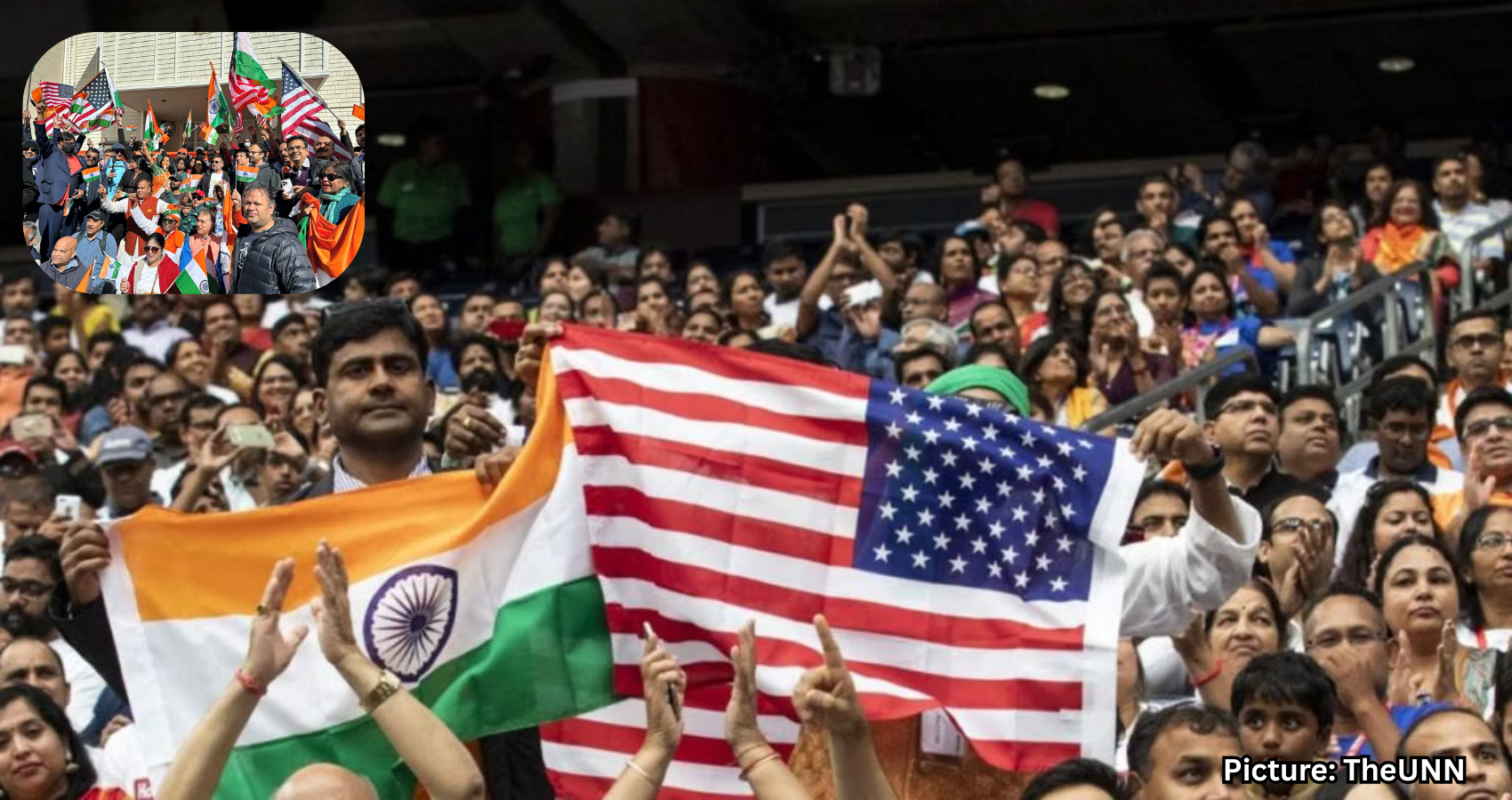
As anti-Indian sentiment rises in the U.S., Indian Americans grapple with their identity and contributions to society, questioning how to foster acceptance while honoring their heritage.
In recent years, a notable increase in anti-Indian animosity has prompted many Indian Americans to confront challenging questions about their acceptance in the United States. This hostility manifests in various forms, from overt racism and religious bigotry to more subtle expressions of prejudice, often echoed by influential political figures.
New York Times columnist Lydia Polgreen has highlighted how anti-Indian sentiment is expressed both crudely and in coded language, ranging from racist social media posts to accusations from prominent leaders that Indian professionals are exploiting immigration systems or “stealing” American jobs. This rhetoric has created unease within a community that has historically defined itself through professional achievement and educational success.
Conservative voices have increasingly targeted Indian immigrants. Polgreen notes that Stephen Miller, a key architect of hardline immigration policies, has accused Indian professionals of manipulating immigration laws to the detriment of American workers. Florida Governor Ron DeSantis has criticized the H-1B visa program, which allows many highly skilled Indian technology workers to immigrate to the U.S., labeling it as “chain migration run amok.” Additionally, comments from Vice President JD Vance, who is married to a woman of Indian descent, have unsettled many in the Indian American community, particularly when he expressed a desire for his wife to convert to Christianity.
Criticism of immigration policies affecting Indian professionals is not confined to one political party. Some Democratic lawmakers have also raised concerns. Senator Dick Durbin, a Democratic leader on the Senate Judiciary Committee, has criticized the H-1B and L-1 visa programs for displacing American workers and benefiting employers at the expense of domestic labor. Independent Senator Bernie Sanders, who aligns with Democrats, has argued that the H-1B program can undermine U.S. wages by replacing high-paying jobs with foreign labor.
This shift in rhetoric marks a stark contrast to the narrative of one of the most successful immigrant communities in modern American history.
Historically, Indian immigration to the United States faced significant barriers. A series of exclusionary laws classified Indians as ineligible for citizenship, resulting in minimal migration. Even after the Luce–Celler Act of 1946 symbolically opened doors, immigration was limited to just 100 individuals per year. According to the Migration Policy Institute, by 1960, there were only 12,000 Indian immigrants in the U.S., representing less than 0.5 percent of a total immigrant population of 9.7 million.
The landscape shifted dramatically with the Immigration and Nationality Act of 1965, which dismantled race-based quotas and prioritized family reunification and skills. This legislation ushered in a new wave of immigrants, including Indian doctors, engineers, scientists, students, and entrepreneurs, who began to reshape the American landscape.
Few immigrant communities have translated opportunity into achievement as effectively as Indian Americans. With a median household income significantly above the national average, many Indian American adults have leveraged their strong work ethic to excel in higher education and secure positions in high-skill professions.
In her forthcoming book, *Indian Genius: The Meteoric Rise of Indians in America*, journalist Meenakshi Ahamed presents vivid portraits of Indian Americans who exemplify this success. The book features notable figures such as Satya Nadella, Vinod Khosla, Shantanu Narayen, Chandrika Tandon, Nikesh Arora, Siddhartha Mukherjee, Deepak Chopra, Nikki Haley, and Fareed Zakaria—individuals who have made significant contributions to business, culture, science, and public life.
From fewer than 15,000 individuals in 1965, the Indian American population has surged to over five million today, accounting for approximately 1.5 percent of the U.S. population. A 2018 Pew Research Center survey revealed that the median annual household income for Indian Americans was $100,000, markedly higher than that of other Asian Americans ($75,000) and the general population ($53,600). Furthermore, Indian Americans were the most highly educated group surveyed, with 72 percent holding college degrees, compared to 51 percent of other Asian Americans and 30 percent of the broader population.
This success story underscores the prominence of Indian Americans as a visible embodiment of the American dream. However, as the community celebrates its achievements, it also bears the responsibility of honoring and investing in its adopted country—the United States of America.
Current attitudes reveal that success does not shield a community from deeper questions about belonging. In a recent essay for the New York Times, Ezekiel Kweku argues that a cohesive and inclusive American identity must be actively forged and continuously renewed through shared efforts. This insight resonates with the experiences of all immigrant communities, including Indian Americans.
Kweku emphasizes that while the world has changed, the understanding of what it means to be American must evolve as well. He asserts that an inclusive national identity, which unites people across cultures and faiths, does not materialize spontaneously; it requires intentional efforts from all segments of society.
This raises critical questions: How are Indian Americans participating in America’s civic life? Are they contributing to a shared sense of purpose, or do they risk being perceived as standing apart?
In a candid conversation with a longtime friend, an evangelical Christian and supporter of the MAGA movement, the complexities of the immigration debate were laid bare. He expressed a perspective that categorized immigrants into “givers” and “takers,” suggesting that some come to contribute while others take without giving back. Although I disagreed with this framing, it forced me to confront an uncomfortable reality—not about how America perceives us, but how we position ourselves within America.
As a proud immigrant, I have experienced both the generosity of this country and the responsibilities that accompany belonging. Immigrants contribute significantly to the U.S. economy, culture, and innovation. However, citizenship—whether earned or inherited—entails duties as well as rights.
This is where the Indian American community must engage in honest self-reflection. Many have integrated economically but not civically. Voting patterns are inconsistent, and political engagement often occurs only when immigration policies directly impact the community. Furthermore, many remain insulated within their social, linguistic, and religious circles.
It is naïve to believe that economic success guarantees acceptance. History shows that it does not.
Some backlash against Indian Americans stems from ignorance and prejudice, but not all can be dismissed as such. Displays of wealth or cultural dominance—such as extravagant weddings that disrupt public spaces—may be perceived as arrogance or indifference by those outside the community.
This is not a call to suppress cultural expression or joy; rather, it is a reminder that integration requires awareness—not just visibility.
America has always welcomed immigrants who build alongside it, not apart from it. Today, approximately 26 million people in the United States are naturalized citizens, representing about 7.5 to 8 percent of the population. The vast majority chose America deliberately, swore allegiance to its Constitution, and accepted the obligations that come with that oath.
The United States remains predominantly Christian, with roughly six in ten Americans identifying as such. Jews, Muslims, and Hindus each represent about one to two percent of the population, alongside a rapidly growing segment of religiously unaffiliated individuals.
Pluralism has always been America’s strength, but it thrives through shared norms, mutual respect, and civic participation. An inclusive American identity does not emerge automatically; it must be forged patiently, intentionally, and collectively.
To foster acceptance, Indian immigrants must embrace a broader sense of belonging. This involves engaging fully in civic life and contributing positively to the country while honoring their heritage. In light of rising anti-Indian sentiment, some have suggested that Indian Americans remain low-profile. However, I contend that our voices are crucial, and this is the moment to be heard.
Engaged citizenship means showing up unconditionally, serving the country faithfully, and being sensitive to the struggles of all Americans—not just those within the Indian American community. While it is easy to highlight the community’s relatively high median income, it is essential to acknowledge the realities faced by millions of others. According to a USDA report, 47.4 million people lived in food-insecure households in 2023, including 13.8 million children. Their struggles are intertwined with ours, and we share responsibility for the society we benefit from.
Building trust is not about demanding acceptance; it is about earning it through consistent contributions. For immigrants, this begins with learning English to participate fully in civic life and engaging with neighbors of all backgrounds. It involves volunteering to serve, not merely to network, and giving to local and national charities. Respecting local laws, customs, and shared public spaces is crucial, as is sharing cultural traditions in ways that invite curiosity rather than resentment.
Above all, it requires fostering genuine friendships across racial, religious, and cultural lines. Trust is built through presence, contribution, and a shared commitment to the society we call home.
America has not yet fulfilled its promise of forming “a more perfect union,” but it remains a work in progress—one that immigrants have shaped at every stage of its history. Immigration is changing America, and if we choose responsibility over entitlement, humility over isolation, and contribution over grievance, it will continue to change America—for the better.
According to Source Name.