
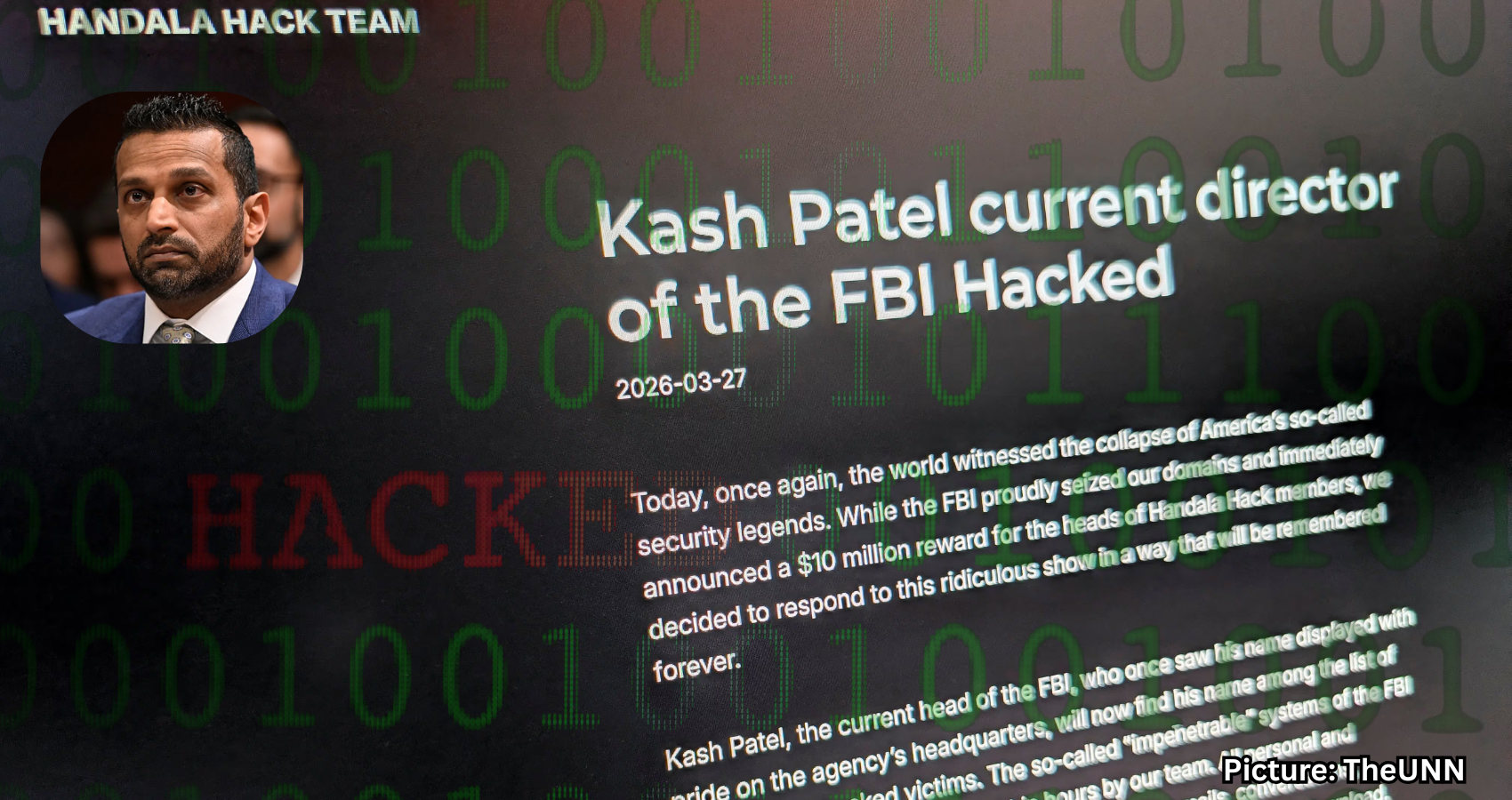
Iran-linked hackers have breached FBI Director Kash Patel’s personal email, releasing a trove of private photographs and documents online, raising concerns over cybersecurity and personal privacy.
Iran-linked hackers have successfully accessed FBI Director Kash Patel’s personal email account, releasing a cache of photographs and documents online. Both the hacker group and the FBI confirmed the breach on Friday.
The group, identifying itself as Handala Hack Team, announced on its website that Patel “will now find his name among the list of successfully hacked victims.” The hackers shared a collection of personal images, which included photos of Patel smoking cigars, riding in an antique convertible, and posing in a mirror selfie while holding a large bottle of rum.
The FBI acknowledged that Patel’s emails had been targeted. In a statement, bureau spokesman Ben Williamson said, “We have taken all necessary steps to mitigate potential risks associated with this activity,” adding that the accessed material was “historical in nature and involves no government information.”
Handala, which describes itself as a pro-Palestinian vigilante hacking group, is considered by Western cybersecurity experts to be one of several fronts used by Iranian state-linked cyber units. The group recently claimed responsibility for a breach involving Michigan-based medical devices company Stryker on March 11, asserting that it had wiped out a significant volume of the firm’s data.
In addition to the photographs of Patel, the hackers released a sample of more than 300 emails, which appeared to include a mix of personal and professional exchanges dating from 2010 to 2019. While Reuters could not independently verify the authenticity of the messages, the personal Gmail account that Handala claims to have accessed matches an address previously linked to Patel in earlier data breaches tracked by dark web intelligence firm District 4 Labs. Google, owned by Alphabet, did not respond to a request for comment.
Iran-linked hacking groups, which had initially remained relatively quiet following coordinated strikes by the United States and Israel against the Islamic Republic last month, have become more active as tensions escalate. Beyond the alleged Stryker breach, Handala stated on Thursday that it had published personal data belonging to dozens of Lockheed Martin employees based in the Middle East. The company confirmed it was aware of the reports and had measures in place “to mitigate cyber threats to our business.”
Gil Messing, chief of staff at Israeli cybersecurity firm Check Point, commented that the breach and subsequent leak seemed to be part of a broader Iranian strategy aimed at publicly embarrassing U.S. officials and making them feel vulnerable. “The Iranians are firing whatever they have,” he said, suggesting a broad and opportunistic approach to cyber operations.
Targeting the personal email accounts of senior officials is not a new tactic. Such breaches, followed by selective leaks, have occurred repeatedly over the years. During the 2016 U.S. election, hackers accessed Hillary Clinton campaign chairman John Podesta’s Gmail account and released a large volume of emails through WikiLeaks. A year earlier, teenage hackers infiltrated then-CIA director John Brennan’s personal AOL account, exposing information related to U.S. intelligence personnel.
This incident underscores the ongoing challenges of cybersecurity and the vulnerabilities faced by public officials in the digital age. As cyber threats continue to evolve, the need for robust security measures has never been more critical.
According to Reuters, the implications of such breaches extend beyond personal privacy, raising questions about the security of sensitive information and the potential for further attacks.