
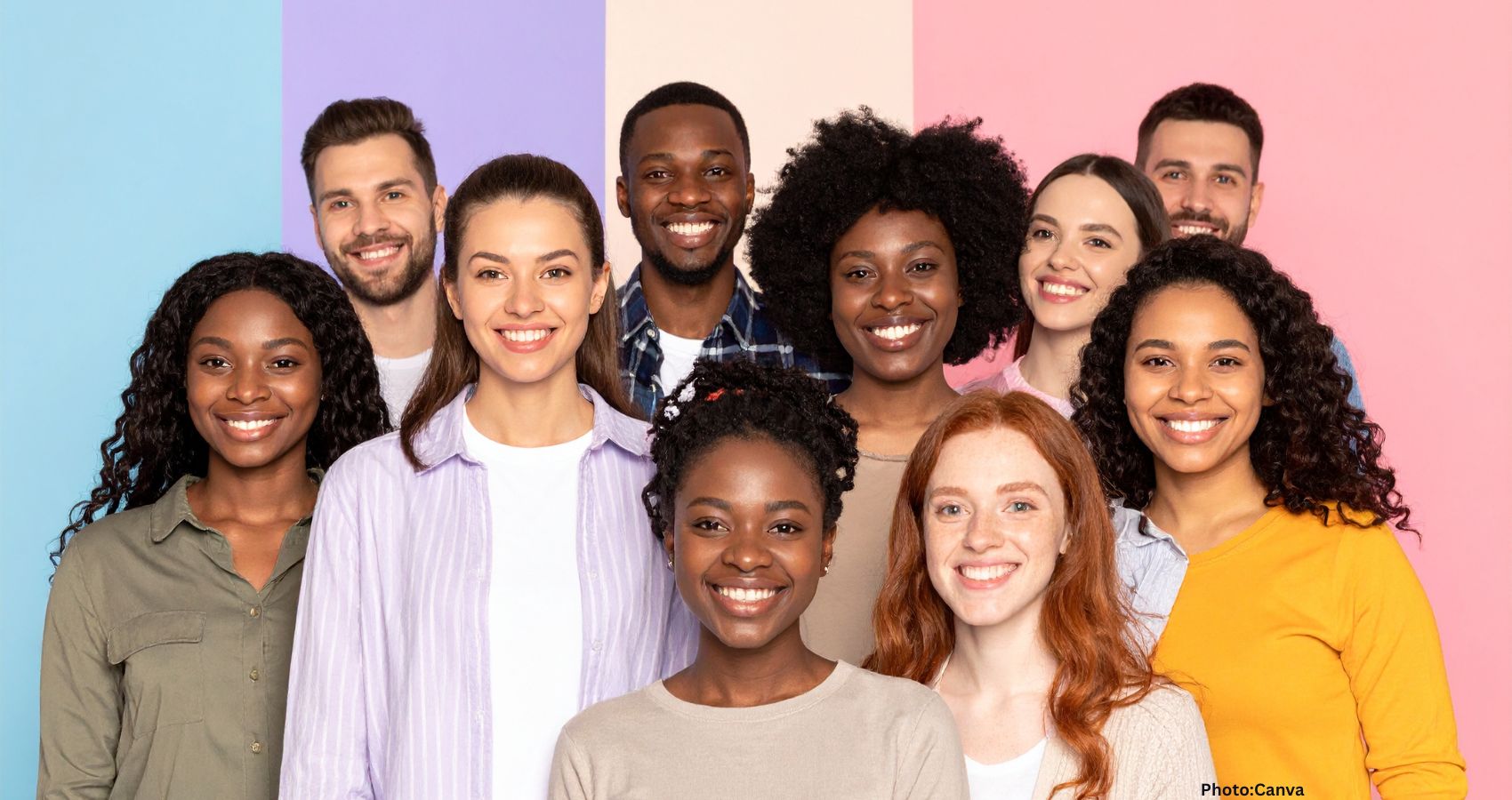
Diversity enriches our lives, fostering discovery and resilience through varied experiences and perspectives shaped by family, education, and personal relationships.
When people hear the word “diversity,” they often think of race, religion, nationality, or politics. However, my first encounter with diversity occurred in a much smaller, noisier laboratory: my own home. Growing up with six sisters and one brother, each possessing distinct personalities, temperaments, interests, and aptitudes, my childhood was anything but dull. To a smaller family, my upbringing might seem crowded, chaotic, and perhaps even exhausting. If anyone deserved sympathy, it was my parents, who managed an orchestra where every instrument played a different tune.
Reflecting on my upbringing, I realize that one of the greatest gifts of my life was being exposed early to the sheer diversity of human nature. In a large family, you quickly learn that not everyone thinks, speaks, reacts, or values the same things you do. One sibling may be quiet, another argumentative, while others may be artistic, practical, sensitive, stubborn, sociable, or self-contained. In such an environment, getting along with others becomes a vital survival skill.
Long before I encountered formal leadership courses or corporate team-building programs, growing up in a large family taught me patience, compromise, observation, and adjustment. These lessons were not wrapped in philosophical language but were part of daily life: sharing space, attention, navigating quarrels, learning to wait, yield, speak up, and sometimes remain silent.
Diversity within a family is not an abstract theory; it is a lived reality. This early exposure prepared me for interactions with relatives, friends, neighbors, coworkers, and bosses. While friction arising from temperamental or behavioral differences can be challenging, it is less likely to defeat those who have learned to navigate such complexities.
In many ways, a large family serves as a practice ground for democracy. It teaches that harmony does not equate to sameness; rather, it involves learning to live constructively amid differences.
My journey into diversity continued with my marriage, which was arranged. My wife and I share a similar value system, which is crucial, as shared values form the foundation of a relationship. However, our personalities differ significantly. I am introverted, preferring solitude, reflection, and the world of ideas, while my wife thrives on human interaction. Where I recharge in silence, she draws energy from socializing. In youth, one might assume that compatibility means similarity, but age teaches otherwise. While similarity can ease life, difference enriches it, provided there is goodwill, mutual respect, and maturity.
Our temperamental differences have not been a source of conflict but rather an opportunity for education. My wife has broadened my social world, while I have introduced a quieter, more reflective note to hers. When grounded in shared values, diversity within marriage can evolve from a problem to be solved into a partnership to be cultivated.
During my engineering studies in college, I also explored Indian and contemporary Western philosophy, sociology, economics, logic, and linguistics. At the time, many of my fellow engineering students resented the humanities and social sciences, believing we should focus solely on “serious” subjects like math and science. We were mistaken.
The diversity of subjects I studied proved invaluable. Philosophy trained my mind to ask foundational questions, sociology illuminated the roles of institutions and culture, economics provided insights into incentives and trade-offs, logic sharpened my thinking, and linguistics enhanced my communication skills. Most importantly, these subjects equipped me to engage with a variety of personalities, each with unique thoughts and actions. In the workplace, one must navigate not only technical constraints but also ego, fear, ambition, misunderstanding, culture, and values.
A memorable insight from a business magazine resonates with me: a CEO once told his managers, “If all of you agree on everything, I can fire four of you.” This humorous remark underscores a critical observation: progress rarely emerges from sameness; it thrives on the tension of differing viewpoints. While absolute agreement may seem efficient, it can stifle creativity, critical thinking, and innovation. Complex problems often require diverse perspectives that enhance insight and reduce susceptibility to groupthink.
The human hand exemplifies functional diversity. Its extraordinary versatility arises from variation rather than uniformity. Each finger differs in length, strength, mobility, and role. If all five digits were identical, grip strength would weaken, precision would diminish, and tool use would be compromised. Nature favors variation; genetic diversity enhances resilience against disease and environmental stress. Uniform populations are fragile, while diverse ones adapt and thrive.
Neuroscience supports this understanding, revealing that the brain responds positively to novelty. New experiences stimulate motivation, curiosity, exploratory behavior, and memory formation, enhancing cognitive flexibility and learning capacity. Without difference, there is little opportunity for learning.
Diversity has profoundly shaped my life, making me more adaptable and teaching me not to expect the world to conform to my preferences. It has softened my rigidity and prepared me for marriage, friendship, work, and citizenship. Diversity has taught me how to listen, adjust, think beyond a single perspective, and recognize that truth, wisdom, and usefulness are often scattered across various people and forms of knowledge.
However, it is essential to acknowledge that diversity is not always comfortable. While often praised in glowing terms, the reality of diversity can be challenging. Differences can irritate us, unsettle us, and exhaust us. Psychology explains that humans are drawn to familiarity, and differences can introduce uncertainty, triggering caution.
Yet, growth often begins where familiarity ends. Diversity is valuable not because it is always pleasant, but because it stretches our capacities. Just as muscles grow through resistance, minds expand by encountering new ideas, perspectives, and ways of living. This truth was evident in my childhood home, my marriage, my college experience, and my workplace.
Diversity is not chaos; it is structured difference. As a grandfather, I encourage young people to embrace diversity and learn from it. In youth, we often seek efficiency, but as we age, we begin to appreciate variety. A life surrounded only by sameness may feel tidy, but it can become spiritually and intellectually impoverished. Some of the most valuable lessons in life come disguised as detours.
Uniformity produces efficiency, while diversity fosters discovery. The goal is not merely difference, but harmonized difference. Just as the fingers of a hand differ yet cooperate, and an orchestra’s instruments vary yet harmonize, civilization advances through differentiated roles—scientists, artists, engineers, teachers, and healers. Diversity is not fragmentation; it is potential synergy.
According to India Currents, embracing diversity enriches our lives and fosters resilience, encouraging us to learn from one another and grow together.