
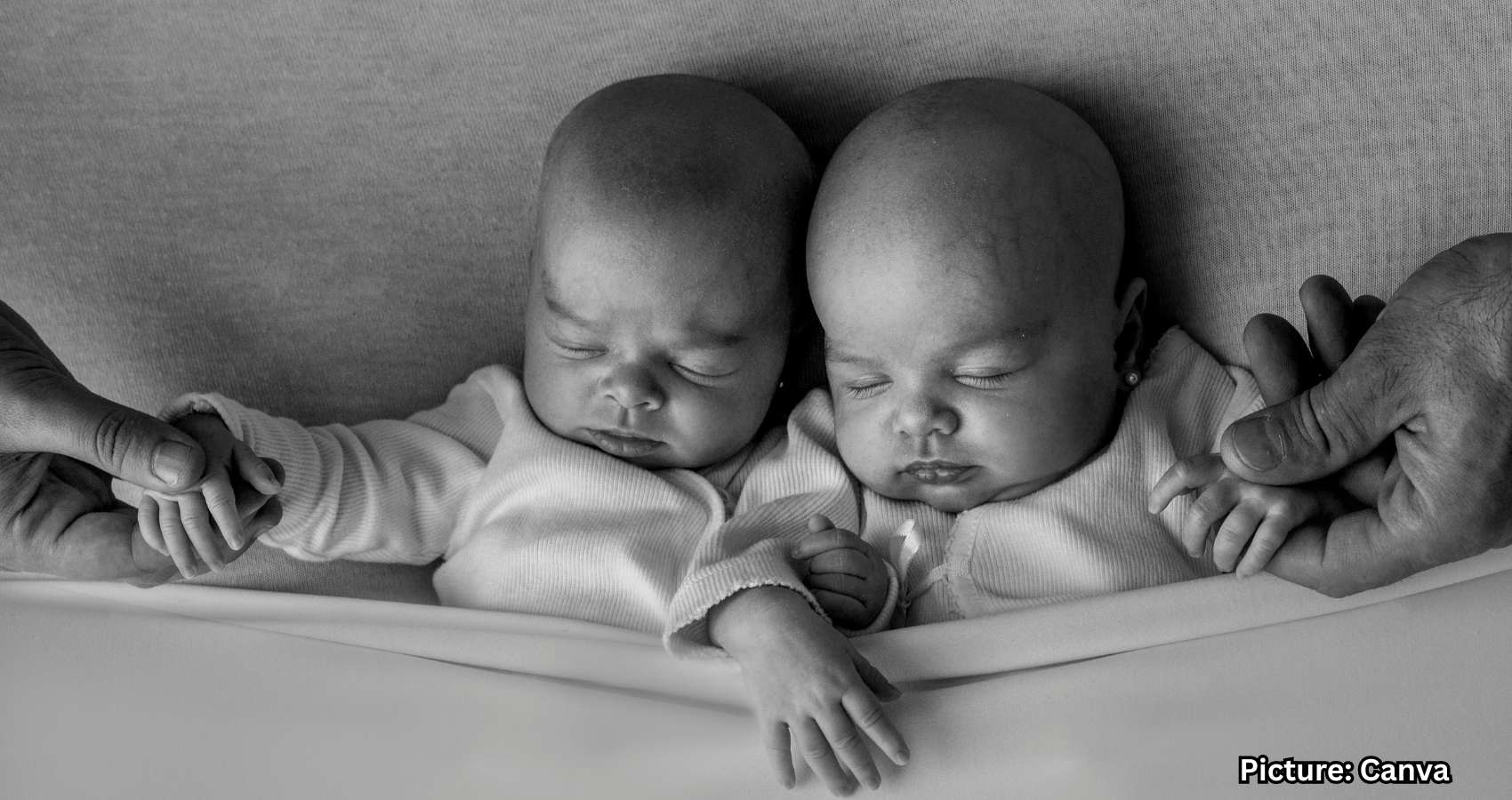
A UK Court of Appeals has ruled that neither of two identical twins can be legally recognized as the father of a child due to the limitations of DNA testing.
A recent ruling by the UK Court of Appeals has highlighted the complexities of paternity determination when it involves identical twins. The court concluded that it is impossible to ascertain which of two identical twins fathered a child, known as “P,” who was conceived in 2017 and is now eight years old.
The case revolves around a woman, referred to only as “the mother,” who engaged in sexual relations with both twins just four days apart. Following the birth of the child, one of the twins was named on the birth certificate and initially acted as the legal father. However, when the relationship between the mother and this twin ended, a legal dispute arose.
Seeking to establish legal paternity for the twin not listed on the birth certificate, the mother and the second twin brought the case to court. The Court of Appeals ruled that legal paternity rights can only be granted to a genetic father. While DNA testing indicated a 50/50 chance for each twin being the father, the court found that there was no definitive answer.
“Currently, the truth of P’s paternity is that their father is one or other of these two identical twins, but it is not possible to say which,” stated Lord Justice Moylan in the ruling. He emphasized that the child’s paternity “is binary and not a single man,” underscoring the legal uncertainty that the case has created.
As neither twin could prove he is the biological father, the court declared that neither could be granted legal parental responsibility. This case is significant as it reveals the limitations of DNA evidence, which is often considered the cornerstone of many legal determinations.
Identical twins present unique challenges in DNA testing due to their nearly identical genetic profiles. Paul Brezina, a physician and fertility expert at Fertility Associates of Memphis, explained that while DNA testing can show a 50/50 probability for each twin being the father, it cannot definitively identify one over the other. “Identical twins share the same genetic DNA code. While there are subtle changes to patterns around the DNA over time that may allow for matching in some circumstances, these markers are significantly degraded at the time of fertilization,” Brezina noted.
In addition to the medical implications, the emotional impact on the parents and child is considerable. Brezina, who was not involved in the case, emphasized the importance of providing support through counseling and medical professionals as they navigate this complex situation.
Research has shown that distinguishing between the DNA of identical twins is a longstanding challenge. A study published in Forensic Science International: Genetics indicates that standard paternity tests cannot differentiate between identical twins due to their shared genetic markers.
While advanced methods such as whole genome sequencing can identify rare genetic mutations among twins, these techniques are complex, costly, and not commonly employed in legal contexts. A separate study published in PLOS Genetics confirms that specialized analysis beyond standard forensic testing is required to distinguish between identical twins’ DNA.
This case serves as a reminder of the intricate interplay between genetics and law, particularly in scenarios involving identical twins. The ruling raises important questions about the future of paternity testing and the legal recognition of parental rights in such unique circumstances, according to Fox News Digital.