
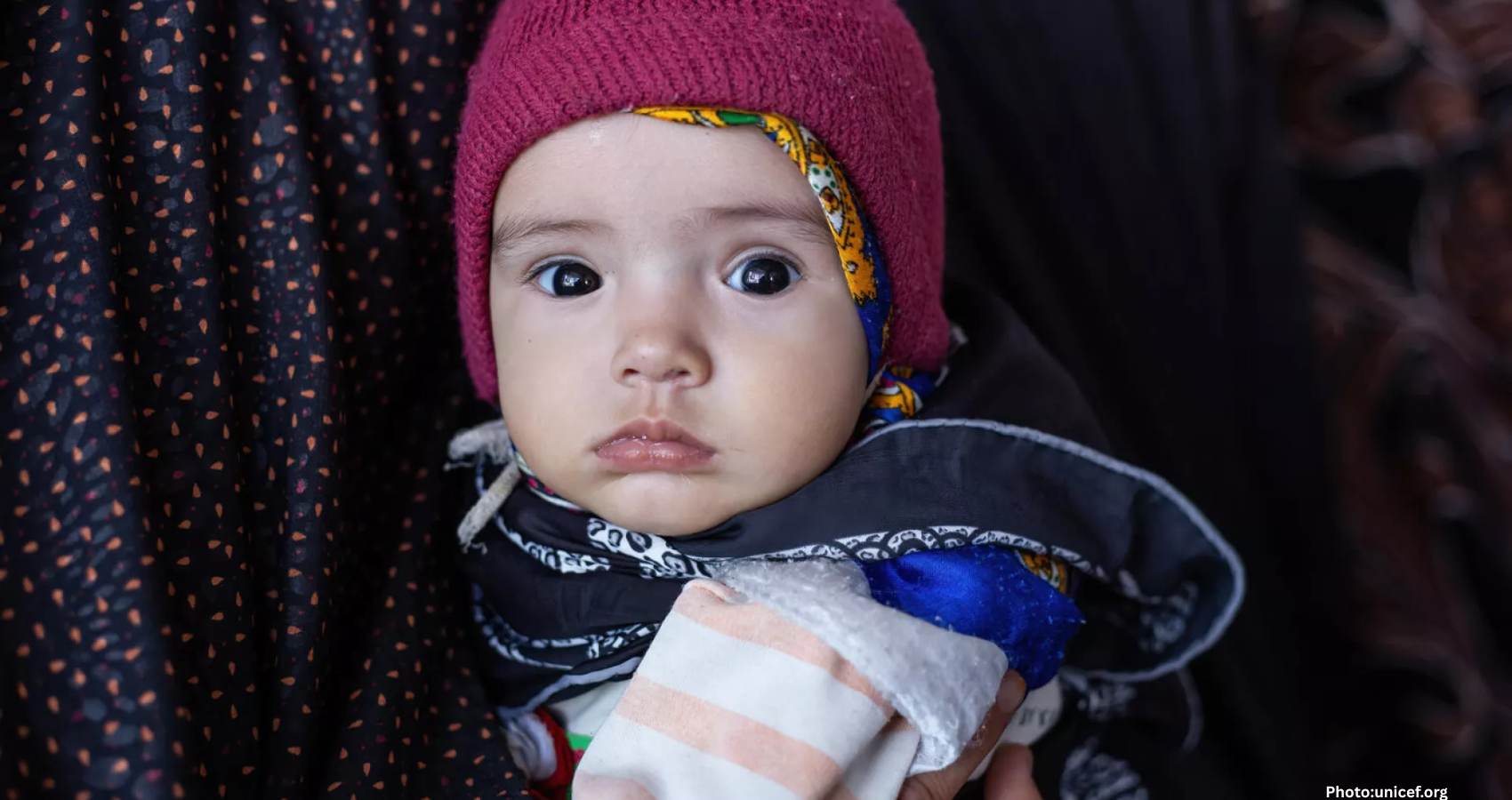
Safia, an Afghan refugee, navigates the challenges of starting anew in Houston while seeking to secure a future in childcare, highlighting the broader issues faced by many immigrants in the U.S.
Safia is one of the 50,500 Afghan refugees who have been admitted to the United States through the Special Immigrant Visa (SIV) program. This initiative was established by Congress to assist Afghans who worked for the U.S. government abroad. A college-educated math teacher, Safia is currently not licensed to teach in the United States and has applied for a childcare training and licensing class at the ECDC – Houston Multicultural Center.
“In order to speed up this self-sufficiency goal, it takes everyone in the household working,” said Earlene Leverett, the program’s former manager. She emphasized the growing recognition among employers of the critical role childcare plays in the economy. “Businesses have jobs; they need employees to fill those jobs, and those employees need childcare.”
Safia’s family had a stable life in Afghanistan. She earned a college degree and taught math at an elementary school in Kabul, while her husband worked as an electrical engineer. Together, they raised three children.
However, Safia’s husband had worked for 17 years with the United States, specifically with USAID. When the Taliban regained control of the Afghan government in 2021, his life was put in jeopardy, as he was placed on a death list, endangering his entire family.
Eventually, Safia’s family found refuge in Houston. Although they are now safe, they face significant economic challenges. It will take years for them to obtain the necessary licensure to work in their respective professions in the United States. Currently, Safia’s husband is employed in a lower-level position at an electronics company, while she has found work as a low-paid helper at a childcare center located far from their home. The lack of transportation has made it difficult for her to commute to work.
“I worked one year in pre-K in Afghanistan,” Safia shared. “I love working with children.” She discovered a free childcare training and licensing class at the ECDC – Houston Multicultural Center, a nonprofit organization that supports refugees and immigrants. However, due to current funding requirements, the course is only available to Afghan refugees who arrived in the United States between 2021 and 2023. Unfortunately, Safia arrived in 2024.
Earlene Leverett, a childcare entrepreneur who managed the ECDC childcare training program for a decade, has witnessed the significant impact the program can have, not only on refugees but also on the wider community.
“Childcare is in crisis,” Leverett stated. She noted that employers are beginning to understand the economic implications of childcare availability. “Businesses have jobs; they need employees to fill those jobs, and those employees need childcare.”
During her tenure, Leverett estimates that between 350 and 400 immigrants graduated from the one-year program. Many graduates went on to open their own childcare businesses, providing options for parents who might otherwise struggle to find care. Most graduates secured employment at existing daycare centers, which often face challenges in expanding due to staffing shortages.
“It’s a win for everyone,” Leverett explained. Parents, particularly mothers who are already home with young children, can significantly contribute to household income. Additionally, other mothers may seek jobs outside the home and prefer providers with a familiar cultural background. Employers, especially in sectors that rely heavily on immigrant labor, such as hospitality and healthcare, can access the workforce they need.
The U.S. government offers some financial assistance to refugees upon their arrival, but this support is short-lived. Nonprofits and other organizations provide language classes and job training with the primary goal of helping refugees achieve self-sufficiency within six months.
“In order to speed up this self-sufficiency goal, it takes everyone in the household working,” Leverett reiterated. “When there is no childcare available to employees, it becomes a significant economic issue.”
Leverett, who operated her own daycare centers in Texas for 16 years, noted that immigrants have always played a vital role in the childcare industry as employees.
Providing training for refugees like Safia to obtain childcare licenses is effective, according to Leverett. “We saw the difference it made in the community. Employment was one of the key needs.”
Currently, Safia is focused on improving her English skills and is searching for an affordable program that will help her obtain a license to open a childcare facility. “I like children; I’m patient with children,” she expressed. “I really want to improve in this field and work with children.”
The challenges faced by Safia and her family reflect the broader struggles of many immigrants in the U.S., particularly in securing stable employment and access to necessary resources.
According to American Immigration Council, the journey of Afghan refugees like Safia underscores the importance of support systems that enable successful integration into American society.