
In “Cactus Pears,” writer-director Rohan Parashuram Kanawade crafts a poignant exploration of grief, love, and the complexities of returning home in this award-winning Marathi film.
In “Cactus Pears” (Sabar Bonda), writer-director Rohan Parashuram Kanawade presents a quiet elegy to loss and love, revealing the hidden lives we carry within ourselves. The film opens in mourning but evolves into a profound exploration of what it means to return home and reconnect with oneself.
The film was recently screened at the 23rd Annual San Francisco International South Asian Film Festival. “Cactus Pears” had its world premiere at the World Cinema Competition of the 2025 Sundance Film Festival in January, where it won the prestigious World Cinema Grand Jury Prize: Dramatic. This co-production between India, the UK, and Canada marked a significant achievement as it was the only Indian title featured at Sundance this year and the first Marathi film to win an award at the festival.
With support from acclaimed filmmakers Mira Nair and Payal Kapadia (known for “All We Imagine As Light”), “Sabar Bonda” is set to release in the U.S. on November 21.
The narrative begins with Anand (Bhushaan Manoj) and his mother Suman (Jayshri Jagtap) receiving the news of a death. Their father and husband has passed away, prompting the pair to leave Mumbai for their ancestral village, where they must participate in traditional funeral rites. Kanawade immerses the audience in the rituals surrounding death, including the ten-day mourning period, omens, and the societal expectations placed upon Anand, whose life has diverged from the family’s traditional path.
As the village engages in collective mourning—through prayers, muted glances, and communal responsibilities—Anand’s inner turmoil intensifies. He is not simply a son returning home; he is a man burdened with secrets. His relationship with childhood friend Balya (Suraaj Suman) serves as the film’s emotional core, representing a connection that seeks tenderness amid societal pressures for conformity.
There are no grand betrayals or melodramatic twists in “Cactus Pears.” Instead, the tension arises from internal and societal conflicts, rooted in silence—the silence of traditions that suppress individuality and the love that must remain hidden to endure. It is within these unspoken spaces that Kanawade discovers poetry, capturing lingering moments of dust in sunlight, fields at dawn, and hands that nearly touch. Each gesture is imbued with both restraint and longing.
The performances in “Cactus Pears” are solid and restrained. Bhushaan Manoj delivers a nuanced portrayal of Anand, whose grief, guilt, and yearning coexist in a delicate balance. Jayshri Jagtap’s Suman embodies quiet strength, portraying a mother who perceives what she cannot articulate. Suraaj Suman’s Balya, with a blend of warmth and world-weariness, provides the film with its moral compass. Their chemistry evokes an intimacy that feels both ancient and forbidden.
The beauty of “Cactus Pears” lies in its ability to leave much unsaid. Kanawade refrains from dramatizing conflict, allowing it to breathe naturally. The scenes between Anand and Balya, illuminated by the soft glow of dusk, pulse with unspoken tenderness. The film prioritizes silence over dialogue, achieving a rare honesty that feels sacred.
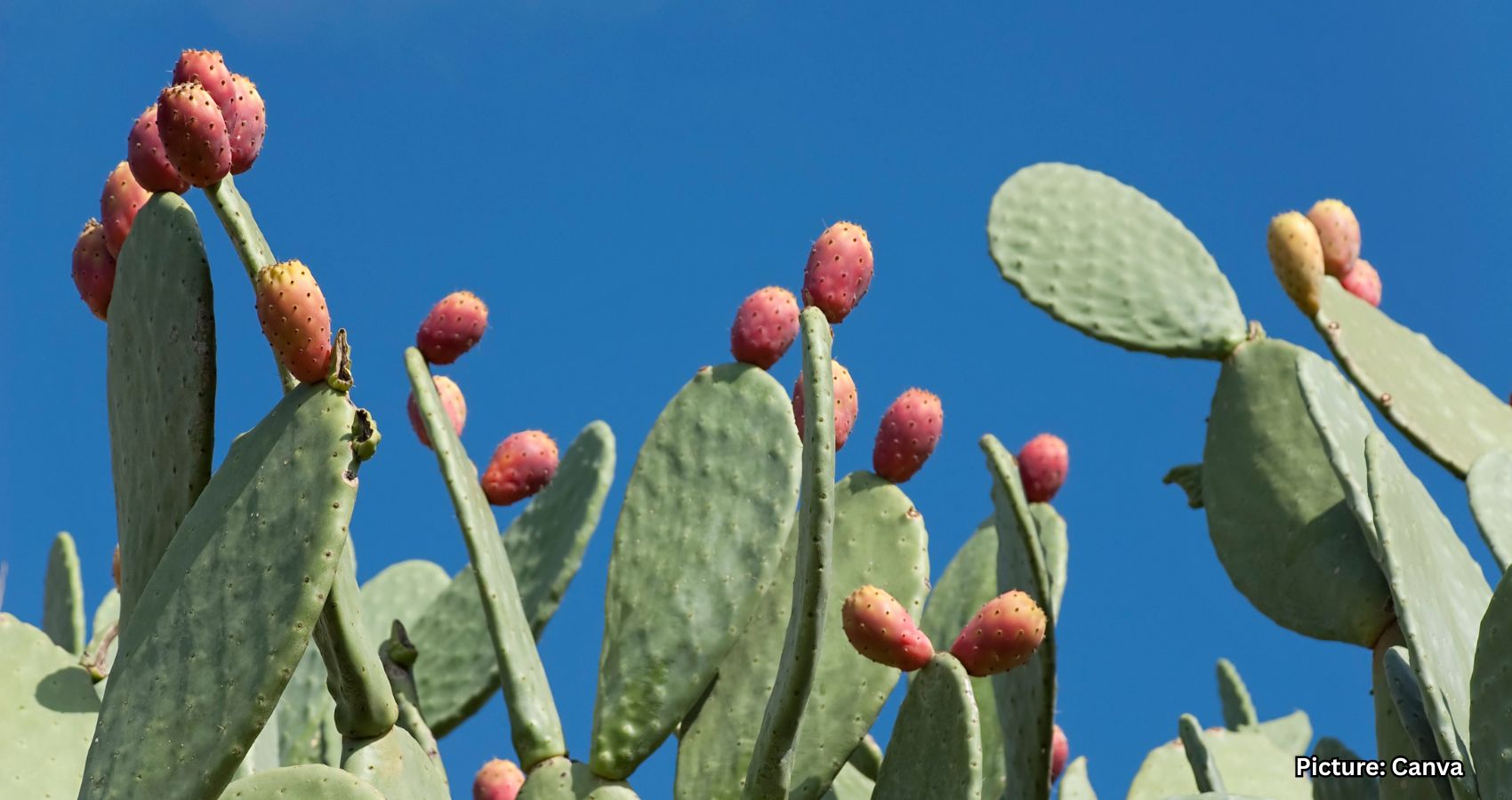
Visually, the film is both spare and haunting. Cinematographer Vikas Urs captures the essence of rural India with a painter’s eye, showcasing dry earth, expansive skies, and crumbling walls. The color palette reflects the emotional landscape—muted browns, greys, and the deep crimson of the cactus pear fruit, which symbolizes vulnerability and love that dares to flourish in arid conditions.
As Anand returns to Mumbai, the audience senses that while nothing has changed externally, everything has shifted internally for him. His transformation is subtle yet profound. The rituals may have concluded, but the ache of loss remains. “Cactus Pears” does not offer closure; instead, it extends an invitation to acceptance.
Tender, meditative, and achingly human, “Cactus Pears” lingers like the aftertaste of its namesake fruit—bittersweet, haunting, and full of life, making it a film that resonates deeply with its viewers.
According to India Currents, “Cactus Pears” is a film that captures the essence of love and loss in a way that is both poignant and relatable.