
By Lakshmi Bayi
In the rich tapestry of Indian folklore, few creatures command the reverence and awe accorded to the elephant. While cows offer warmth and sustenance, dogs provide boundless affection, and horses display an elegant, almost mythical partnership with humans, the elephant stands apart—grand, exotic, and undeniably wild. It is a creature that has fascinated humanity for millennia, embodying a unique blend of raw power and gentle wisdom.
A Symbol of Prestige and Prosperity
In ancient Kerala, it was said that three passions could ruin a prominent homestead: an obsession with Kathakali, a love for literature, or the keeping of elephants. Yet, despite the risk, a pachyderm grazing in one’s yard was the ultimate status symbol. It signaled prosperity, even if that prosperity was fleeting. The maintenance of an elephant is no small feat; an average adult can consume 7 kg of rice in a single meal, a fact that reportedly led matriarchs of the past to despair over the household budget.
Mythology elevates this creature further. Indra, the king of the devas, rode the white tusker Airaavatham, a treasure born from the churning of the “Ocean of Milk” (Paalaazhi) by gods and demons. From the mists of legend to the historical campaigns of Hannibal, the elephant has always been a symbol of monarchical power and grandeur.
The Wild Spirit and the Water Waltz
At their core, elephants remain wild spirits. They can be trained but never truly tamed. Their massive appetite for food is matched only by their love for water. On land, they may move with a heavy gait, but in water, they transform. Much like swans that waddle awkwardly on the shore but glide gracefully across a lake, elephants are natural dancers in the water, frolicking with a joy that is infectious to watch.
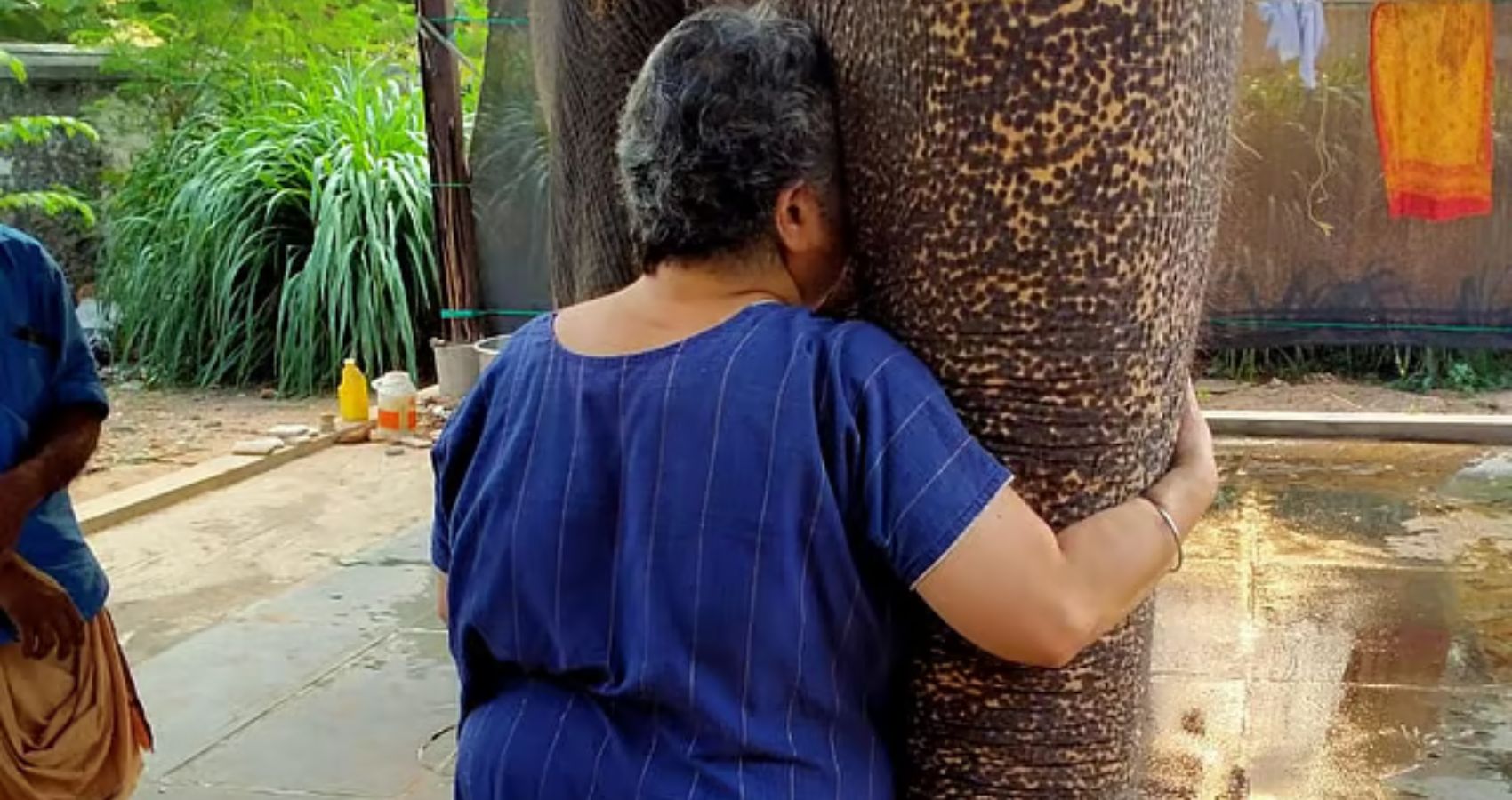
Physically, they are marvels of nature. Their tusks—essentially outwardly projecting teeth—are groomed by mahouts just as grandmothers once cared for children, using mud to shape and direct their growth. Their trunks are multi-functional tools, capable of uprooting a coconut tree or daintily picking up a single grain of rice. Through this trunk, they show affection, sucking on human hands without ever exerting the crushing force of their jaws.
Senses and Sensibility
Smell is an elephant’s superpower. They can detect intruders from miles away, making wind direction crucial for anyone attempting to approach a herd in the wild. Despite their size, they are naturally shy, preferring the camouflage of the forest to confrontation. However, they are social creatures with a complex understanding of their surroundings.
Hearing is another vital sense. Their enormous ears act as a divide between head and body, sensitive to the slightest sound. A trained elephant should always be approached by name; this simple act reassures the animal of familiarity and safety. Surprising an elephant from behind can trigger a panic response that turns even a calm animal into a dangerous force.
The Mahout and the Marmam
The relationship between a mahout and his elephant is akin to that of a parent and child. A well-adjusted elephant often reflects the care of a good mahout. This bond is forged through rigorous tradition. Aspiring mahouts once spent years mastering their craft, learning the vital energy points, or marmams, on an elephant’s body.
Legends speak of experts who could calm a raging bull with a mere look or a mantra. The training was intense; apprentices would practice striking a specific mark on a wall hundreds of times to perfection. This precision allowed them to control the massive beast with a simple touch of a stick to a specific pressure point, bringing it to its knees not through force, but through knowledge.
Festivals, Fear, and Exploitation
Sadly, the life of a captive elephant is not always one of reverence. The chaotic noise of temple festivals—the crowds, the firecrackers, the acrid smell of gunpowder—can be a traumatic ordeal for an animal that craves the quiet of the jungle. Fear is a potent trigger for aggression. When humans overstep, grabbing tails or tusks, the elephant reacts instinctively to free itself, often with disastrous consequences for the fragile human frame.
Commercialization has also taken its toll. Competition has led to cruel practices, such as forcing elephants to hold their heads in unnatural, high positions to appear more “regal.” Yet, amidst this, there are moments of profound connection. Experienced mahouts treat their charges with the respect due to a deity, greeting them as they would Lord Ganesha.
The Cycle of Life
Elephant society is matriarchal, led by wisdom and experience. Male elephants eventually leave the herd, wandering to spread their genes. During musth, a period of heightened testosterone and aggression, males become formidable and must be treated with extreme caution.
They are creatures of specific tastes, favoring the creamy heart of coconut trees, watermelons, and the red banana. Their intelligence and memory are legendary, as are their idiosyncrasies. There is the amusing tale of an elephant named George, whose Christian name caused a stir regarding his entry into a Hindu temple procession—a humorous reminder of the complex intersection of human culture and the animal world.
A Lesson in Living
Ultimately, a casual observation of the elephant kingdom offers a blueprint for living. They teach us to care for our herd, to find joy in simple pleasures like a bath or a meal, and to remain gentle despite possessing immense power. As a species, we have much to learn from these grey giants who walk the earth with such quiet dignity.