
FIFA has announced the format and automatic qualifiers for the 2030 World Cup, which will feature matches across six countries on three continents to celebrate the tournament’s centenary.
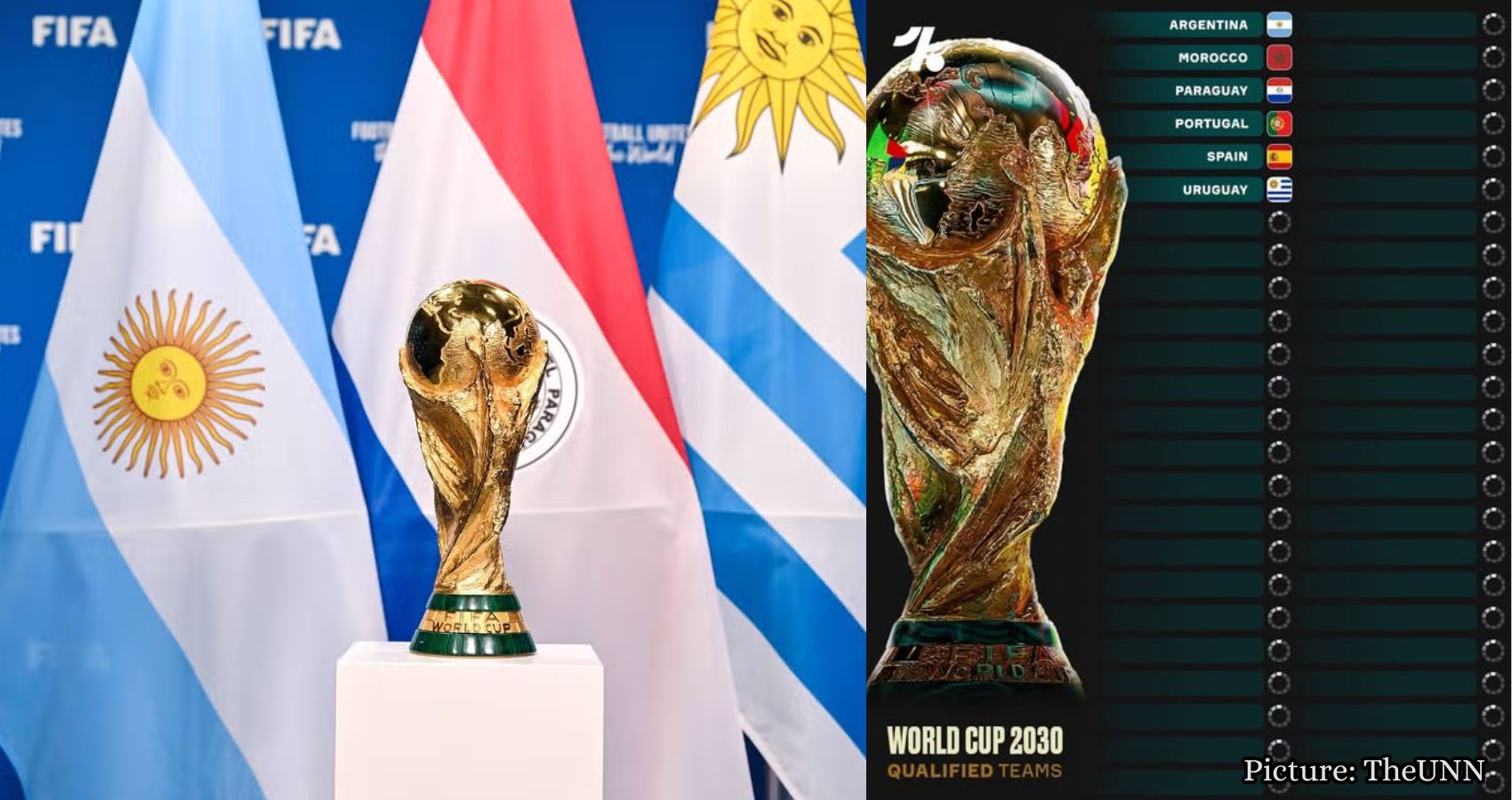
FIFA has confirmed that six nations will automatically qualify for the 2030 FIFA World Cup. The tournament hosts—Morocco, Portugal, and Spain—along with centenary celebration hosts Uruguay, Argentina, and Paraguay—will secure their spots without the need for qualification matches.
This automatic qualification was approved by the FIFA Congress as part of the governing body’s plans for a landmark tournament that marks 100 years since the inaugural FIFA World Cup was held in Uruguay in 1930.
In a departure from previous editions, the 2030 tournament will take place across six countries spanning three continents. To accommodate the unique logistics of this format, FIFA has announced that the tournament schedule will be specially adapted.
The tournament will kick off with three South American matches scheduled for June 8-9, 2030, several days prior to the official opening ceremony in Morocco, Portugal, and Spain, which will take place on June 13-14.
The first group-stage matches involving the remaining teams in the groups of Uruguay, Argentina, and Paraguay are set for June 15-16, followed by the second group-stage matches for all teams in those groups on June 21-22.
The six teams participating in the South American fixtures will have approximately 11 to 12 days to travel, recover, and prepare before their second group-stage matches in Europe or Africa. Their remaining group opponents will also benefit from additional travel and rest time, while the overall tournament calendar will remain consistent with the schedule used for the 2026 FIFA World Cup.
FIFA has emphasized that these adjustments are designed to alleviate any additional burden on participating teams, players, or their domestic clubs, despite the expanded travel requirements. The governing body also highlighted that staging three matches in South America allows local supporters to partake in the World Cup centenary celebrations without needing to travel to Europe or Africa.
The tournament is set to conclude with the World Cup final on July 21, 2030, marking the end of what is expected to be one of the most ambitious editions in FIFA World Cup history.
According to The American Bazaar, this unique format aims to enhance the global experience of the World Cup while honoring its rich history.