
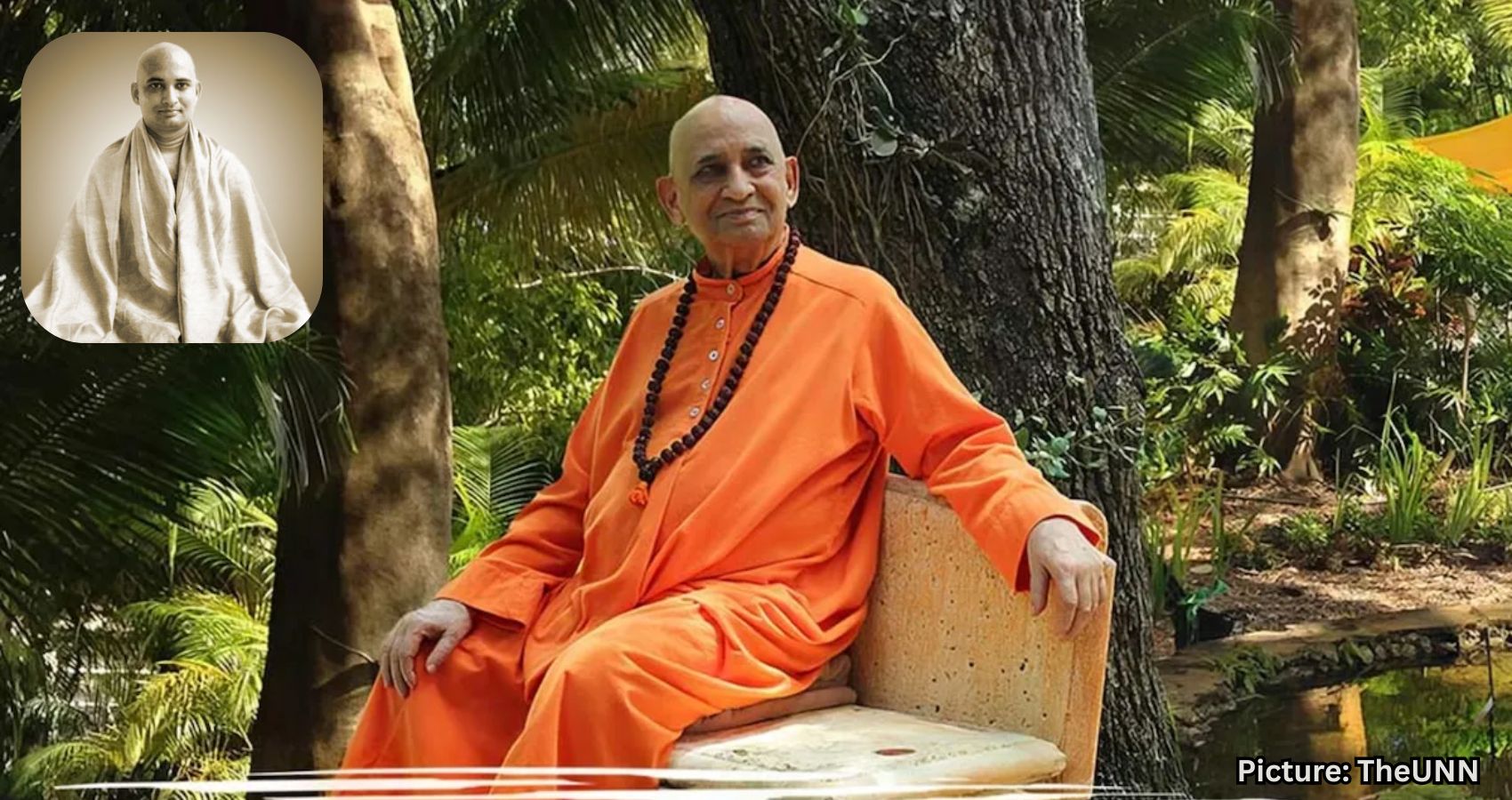
Swami Jyotirmayananda, founder of the Yoga Research Foundation, emphasizes that yoga is a union with God, offering insights into its essence ahead of the International Day of Yoga 2026.
As the world gears up to celebrate the International Day of Yoga on June 21, 2026, Mandayam Osuri Thirunarayanan engaged in a conversation with Swami Jyotirmayananda, the founder of the Yoga Research Foundation, to delve into the essence of this ancient practice.
In response to the question about the simplest definition of yoga, Swami Jyotirmayananda stated, “Yoga is Union with God. It is the goal of all religions.” This succinct explanation underscores the spiritual dimension that yoga embodies.
The relationship between yoga and spiritual growth is profound. Swami Jyotirmayananda explained, “The practice of Yoga in its integral form removes the root disease referred to as ignorance or avidya, which is a lack of awareness of one’s essential spiritual nature, as well as all its effects on the entire human personality.”
Integral Yoga, as described by Swamiji, encompasses a blend of various forms: Hatha Yoga, which includes physical exercises; Dhyana or Raja Yoga, focusing on mental concentration and meditation; Bhakti Yoga, which fosters divine love; and Jnana Yoga, involving deep inquiry into the self and the nature of the ego. He noted, “The existence of all the sages and saints gives proof of these benefits.”
When asked about the practice of different types of yoga, Swami Jyotirmayananda provided detailed guidance. For Karma Yoga, he advised transforming daily activities into a process of spiritual growth, emphasizing humility and the attitude of being an instrument of the divine. “Seek mental integration and not any outward gain through your actions,” he said.
In Bhakti Yoga, he encouraged performing actions as acts of worship, surrendering the ego to God, and engaging in practices such as prayer, meditation, and selfless service. “Allow your feelings and sentiments to flow towards God with wholehearted devotion,” he added.
Swamiji described Raja Yoga as a practical approach to achieving concentration and control of the mind through yoga exercises and ethical practices. He explained that Jnana Yoga involves self-inquiry and reflection on scriptures, leading to the realization of one’s true nature as the absolute self.
On the purpose of life according to yogic philosophy, Swami Jyotirmayananda stated, “Enlightenment, or the revelation of one’s essential identity as the divine self.” He emphasized that self-realization can be attained through a disciplined and integrated yogic life, which includes meditation, yoga exercises, and selfless action.
“Everyone who wants to be healthy and happy needs to practice Yoga, just as everyone needs to take healthy tonics,” he remarked, highlighting the universal applicability of yoga.
Regarding the activities of the Yoga Research Foundation, Swami Jyotirmayananda shared that the organization focuses on projects that promote peace, harmony, and universal welfare. These initiatives include daily lectures at the Miami Ashram, online podcasts, the International Yoga Guide magazine, and a newly opened Integral Yoga Center offering classes in Hatha Yoga, Ayurveda, and spiritual philosophy.
For beginners, he advised seeking guidance through satsanga, which involves studying with an authentic guru or other inspiring spiritual influences. This communal approach fosters knowledge and spiritual growth.
The upcoming International Day of Yoga 2026 carries the theme “Yoga for Healthy Ageing.” Scientific studies have increasingly validated the benefits of yoga, particularly in relation to aging. Research indicates that yoga enhances muscular strength, flexibility, respiratory and cardiovascular function, and overall well-being.
A comprehensive review by Catherine Woodyard in 2011 highlighted that yoga practices can reduce stress, anxiety, and chronic pain, while improving sleep patterns and quality of life. Further studies, including one by Purnima Madhivanan and colleagues in 2021, have shown positive effects of yoga on cellular aging, mobility, mental health, and cognitive decline, which are particularly relevant for older adults.
Swami Jyotirmayananda was born on February 3, 1931, in Bihar, India. He was initiated into the ancient order of Sanyasa by Sri Swami Sivananda in 1953, gaining recognition for his expertise in Yoga and Vedanta. In 1962, he moved to Puerto Rico, where he founded his first ashram and conducted classes and lectures in both English and Spanish.
In 1969, he established the Yoga Research Foundation in Miami, which has become a hub for international activities and teachings. Today, at 95 years old, Swami Jyotirmayananda continues to share his wisdom and guide spiritual aspirants toward enlightenment.
As we approach the International Day of Yoga, his insights remind us of the profound connection between yoga and spiritual growth, encouraging individuals to embrace this ancient practice for a healthier, more fulfilling life.
According to India Currents, Swami Jyotirmayananda’s teachings continue to inspire many on their spiritual journeys.