
North Texas is experiencing significant Asian population growth, sparking debates over immigration, cultural change, and community identity among residents.
North Texas is undergoing a major demographic and cultural shift as Asian communities expand across the Dallas-Fort Worth region. Central to this growth are Indian Americans, who are establishing businesses, cultural organizations, schools, and religious institutions in communities north of Dallas. However, these changes have also ignited backlash from some longtime residents and conservative commentators who express concerns about immigration, development, and the evolving character of their neighborhoods.
The debate has become particularly pronounced around Hindu temples and a proposed Muslim community, transforming demographic change into a broader discussion about identity and integration in Texas.
The Dallas-Fort Worth metropolitan area had approximately 661,000 Asian residents in 2024, accounting for 7.8% of the region’s population. Between 2012 and 2022, the Asian population in the broader Metroplex grew by nearly 269,000 individuals, marking an increase of about 70%. Indian Americans represent a significant portion of this growth, with census estimates indicating that Texas’ Indian American population exceeded 434,000 in 2020, up from around 231,000 in 2010.
Cities like Frisco and Plano have emerged as major hubs for Indian American families, particularly professionals in technology, healthcare, and other industries. As the population has expanded, so too has the infrastructure supporting it, including restaurants, grocery stores, temples, cultural centers, and community organizations.
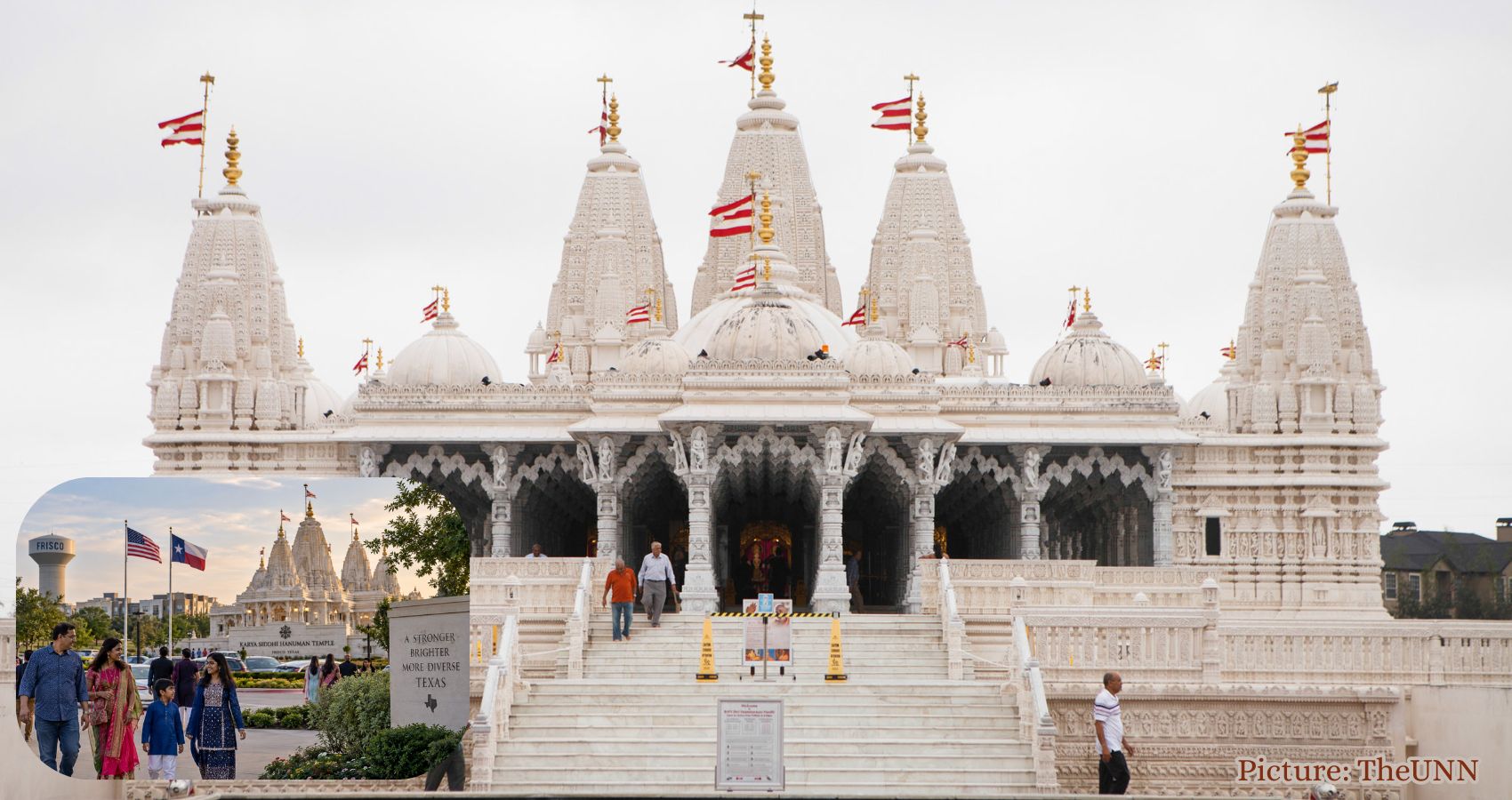
One of the most visible examples of this growth is the Karya Siddhi Hanuman Temple in Frisco, a large Hindu complex that has become a landmark in the area. A video released in 2026 by conservative commentator Savannah Hernandez brought renewed attention to the temple and the region’s changing demographics. This video sparked online debates concerning immigration, religion, and the cultural transformation of North Texas.
Critics have raised questions about the scale and visibility of new religious institutions, linking them to broader concerns regarding immigration and integration. Conversely, Indian American residents and their supporters argue that temples and cultural centers are simply part of a growing community establishing institutions to serve its members. This disagreement highlights a larger issue: as suburbs rapidly change, some longtime residents are questioning how much demographic and cultural transformation their communities can absorb while retaining their traditional identity.
Another flashpoint in this discussion is The Meadow, a proposed 400-acre development near Josephine, northeast of Dallas. Previously known as EPIC City, the project is associated with the East Plano Islamic Center and envisions more than 1,000 homes, a mosque, a faith-based school, apartments, and commercial facilities. Supporters describe it as a master-planned community designed around an established Muslim cultural and religious network.
Opponents have voiced concerns about land use, transparency, and whether a development specifically marketed toward Muslims could lead to social or religious segregation. Supporters have rejected these characterizations, arguing that much of the opposition stems from misconceptions about Muslim Americans. The project has also drawn federal scrutiny, with the Department of Housing and Urban Development launching an investigation into potential fair-housing violations. A separate investigation by the Justice Department was later closed after developers agreed to comply with federal fair-housing requirements.
These controversies are unfolding against the backdrop of rapid overall population growth in North Texas. The North Central Texas Council of Governments reported that the region added over 203,000 residents in 2025, bringing its population close to 9 million. Asian Americans have been among the fastest-growing populations in the area, with the Texas Tribune noting a 5.5% increase in Texas’ Asian American population between 2022 and 2023. Dallas-Fort Worth recorded the largest numerical increase in Asian Americans among U.S. metropolitan areas during that period.
For many Asian American families, this growth signifies economic opportunity and the chance to build communities where they can maintain their cultural and religious traditions. However, for some longtime residents, the rapid growth raises concerns about housing, infrastructure, development, and cultural integration. These concerns have increasingly intertwined with broader debates over immigration and ethnicity.
The issue has also entered the realm of Texas politics. In 2026, the Texas Tribune reported on tensions surrounding Indian Americans in Frisco, where discussions about immigration, H-1B visas, and demographic change have increasingly intersected with Republican politics. Some conservative voices have described the changes using phrases such as an “Indian takeover.” Indian American residents and their allies have pushed back against this rhetoric, arguing that population growth should not automatically be perceived as a threat.
This debate underscores an important distinction: concerns about rapid development and immigration policy differ from opposition based on ethnicity or religion. North Texas’ transformation is not limited to Indian or Muslim communities; it also includes the expansion of Chinese, Vietnamese, Korean, Filipino, and other Asian populations throughout the region.
New businesses, religious institutions, and cultural organizations are becoming integral to the landscape of Texas suburbs that were once considerably less diverse. For longtime residents, these changes can be striking. For newer residents, they represent opportunities to build communities, raise families, and engage in the economic life of Texas while preserving cultural traditions.
The ongoing discussions surrounding temples, Muslim developments, and immigration are part of a much larger transformation. North Texas is rapidly becoming more diverse, and the central question is no longer whether this change is occurring, but rather how longtime residents and newer communities will navigate it. The outcome will determine whether demographic diversity fosters greater integration or deeper division in the region.
According to The Texas Tribune, the evolving dynamics in North Texas reflect broader national trends regarding immigration and cultural integration.